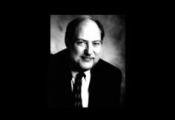
Giving People More of a Stake in High Holiday Services
15 Elul, 5768/29 September, 2007
As I prepare for my first High Holidays at Temple Beth Shalom, I wanted to give you a peek into some of the things I am planning for our services. There a few tweeks that I will make to give the services a special feeling. While I am spending a lot of time preparing sermons, I also give a considerable amount of time to plan the order of services, a sort of scripting. It is in this planning that you are able to add d imension and depth to a service. Ultimately the quality of the service will be determined by the ‘lev’-the heart that is felt by those who lead and how all of us participate in the service. Making openings for the heart to find expression is one of the keys to planning.
The High Holiday services are a unique opportunity to build a sense of community as well as to create a space for the individual to express his or her spiritual needs. There are a number of communal prayers that are recited just after the Haftarah-the prophetic reading which provide opportunities to acknowledge people who serve and people who have made significant transitions in their lives. During these prayers I will be asking people to come up on the Bimah to honor them. You might be among them, so now you are duly notified.
Rosh Hashannah First Day
Prayer for New Babies: This communal prayer custom is unique to TBS. We call on all parents and grandparents who celebrated the birth of a new child in their families during the past year.
Prayer for the Congregation: I will invite all new members and those who converted to Judaism during the past year to come up to be honored for their decision to join our community and our people.
Prayer for the Country: I will invite to the Bimah those who serve in our armed forces, veterans, civil servants, and public officials within our congregation who will receive our gratitude for serving our country.
Prayer for Jewish Communities: I will invite members of our congregations who come from Jewish communities outside the United States to acknowledge our diversity as a Jewish community.
Prayer for Israel: I will invite all of you who visited Israel during the past year to affirm our commitment as American Jews to the Jewish homeland.
Yom Kippur Day
Yekum Purkan (Prayer on behalf of Scholars) I will invite to the Bimah our members who have served the Jewish community as educators, professionals, and have taught Torah during the past year to wish them success and to extend honor to them for their efforts.
Prayer for the Congregation: I will invite to the Bimah our Board of Directors and all those who have served on synagogue committees during the past year to acknowledge their service to our community.
Prayer for Peace: I will call to the Bimah our worshippers who have volunteered with organizations to help improve the world. We want to acknowledge social activists in our midst who dedicate their lives to social justice and improving the human condition either as professionals or volunteers.
The Temple Beth Shalom Paginator: Hama’amad- (from the word amud-page)
As a kid I sat behind a wooden scoreboard at little league games and put numbers in the slots to tell the score. When I was a young man I went to a shul that had its own type of scoreboard. A child stood behind it and kept on flipping pages with large numbers on it. I wondered if there was some sort of competition on the Bimah between the cantor and the rabbi. Maybe they were keeping thetime of the service. Upon closer observation I saw that this scoreboard announced the pages so that the Rabbi or Cantor did not have to verbally announce the page and detract from the service. When I became a rabbi I commissioned a woodworker to make this contraption and called it a paginator or the Hebrew term Hama’amad.. I then recruited kids who could follow the service to sit on the Bimah and flip the pages so everyone in the congregation knew where we were in the Siddur.
One of my first official acts as rabbi at TBS was to commission a paginator to be made by Master Paginator Builder, Lyle Margulies, of the Northwest Jewish tribe of Seattle. (He is a member of another Beth Shalom up in Seattle, one of the Beth Shalom franchise shuls that dot our fine country.) He hopes to have it to us by the High Holidays where it will bless our Bimah and will help all of you not to lose your place at services ever again (unless the paginator operater falls asleep or misflips a page which will all cause us to be on the wrong page, God forbid.)
There is a method to my madness about something that seems inconsequential or quaint as a synagogue paginator. It is one of the methods I use to increase participation in our worship. It provides an opportunity for young persons to sit on the Bimah and to engage in the service. It removes anxiety from people who have trouble following Hebrew about where we are in the service. It allows the Rabbi and Cantor to focus on leading the prayers. It makes our service more accessible to newcomers. It may even allow us to keep score. I hope you enjoy our new paginator and that it enhances your worship experience at TBS.
Younger Persons: Become a Flipper or a Greeter Usher by joining the Future Mentches of Israel-FMI
The Future Mentches of Israel-FMI-is the name of our loose organization of young volunteers at Temple Beth Shalom. To join all you need to do is volunteer for the following. Parents and Teenagers: Please sign yourself or your children up by responding to this email or by calling and emailing the office before 9/7/07.
Paginator Flippers
I call upon our children to serve as ‘page flippers’ during High Holiday services. Children need to be available to sit at least one hour on the Bimah. Flippers will sit near the Rabbi who will help them to keep pace with the service and flip the correct pages. I recommend that the starting age for a flipper on the High Holidays be 10 and up or any child that has basic Hebrew reading ability. Even if you don’t, please volunteer. Younger children will be given an opportunity to be flippers on Shabbat. Paginating can be counted as community service for those who go to schools that require community service hours. We will be organizing a regular sign up process for services throughout the year after the holidays.
Young Adults as Greeter-Ushers
Speaking of community service, I call upon teenagers, post Bar Mitzvah and up, to serve as greeter ushers during the High Holiday services. All volunteer greeter ushers may apply this activity toward Junior High and High School community service hours. By ushering you get an automatic membership in FMI.
This invitation also goes out to adults at TBS, who want to enhance our services by making them more welcoming. I will be hosting a dessert and 1 hour orientation meeting on how to be a greeter-usher at the synagogue on Sunday, September 9th at 7:00pm in the Beit Midrash which is a prerequisite for getting community service credit. Please note that anyone who serves as a greeter usher is also fulfilling a mitzvah-hachnasat orchim-welcoming the guest. Jewish hospitality is the congregational theme this coming year.
My wife Robbie and I wish each of you a Shanah Tovah,
This will be posted to Rabbiblog. To see previous entries, please ciick http://rabbidovblog.blogspot.com/
Shalom,
Rabbi Dov Gartenberg

Wednesday, August 29, 2007


The Story of Eugene Schlesinger
The most enjoyable aspect of coming to a new community is eliciting people’s stories and Jewish journeys. I have been doing a lot of listening, giving opportunities for people to tell their stories in private or in groups. Some of you are ready to tell your story. Others want more time. I hope to hear from all of you over time. Judaism is a story telling religion and people. Our most beloved book-The Haggadah of Pesah-means telling. We are commanded to tell the ‘story’ of the Exodus to our children. By extension, we are commanded to tell our own exodus and birth stories to our loved ones and to our community.
In this Igeret (epistle) I would like to share with you a few stories I heard this week from a long time, beloved, and respected member of our congregation, Eugene Schlesinger. Eugene invited me to his home to spend some time together. He proceeded to share with me his stories of growing up in a small village and surviving the holocaust in Czechoslovakia. Eugene gave me permission to share them with you.
Eugene grew up in very traditional Jewish home in a small village which had a handful of Jewish families. There were similar villages in the area, all with their handful of Jewish families. None of the villages had a synagogue or the capacity to make a minyan. So Shabbat rotated from village to village, with the families from close by villages staying with families in one of the villages to be able to make a minyan and to hold services. They had no rabbi, but in Europe regular Yiddin were well educated religiously and could organize their services without a rabbi. I was very touched by this picture of a movable minyan and the readiness of these pious families to move out of their homes for an entire Shabbat to create community with their ‘landsmen’ in another village. This shows that you do not need a building to create community. What really builds community is the love and desire to share special time with others. Sabbath is what ideally binds the Jews. What a remarkable illustration of its power.
Eugene told me many amazing stories about the holocaust, but this one stands out. When the Nazis came to take him, he had to part with his mother. She told him to wrap his Tallit and Tefillin each morning in order to stay alive. Through four years in the camps Eugene kept her command, wrapping his tallit and tefillin often in the most extreme conditions. Toward the end of the war he escaped from one of the camps as the German war machine was collapsing. He recovered a German army uniform from a dead soldier and put it on to disguise his identity. One day he came upon a field and saw a large assemblage of German soldiers standing with their arms up. He realized that they were prisoners of an advance Russian unit. He started to walk toward the prisoners but was stopped by a Russian soldier who ordered him to hand over his knapsack. He rifled through it and pulled out Eugene’s talit and tefillin bag. He looked at Eugene and said, ‘Ivri (Hebrew)?’. Eugene nodded. The Russian soldier pointed to the forest and Eugene realized that he needed to leave right away. He ran toward the forest to safety and heard the machine gun fire behind him as the German prisoners were gunned down by the Russians. He realized that the Russian soldier was a Jew and realized that Eugene was wearing a German uniform to survive.
A couple of weeks ago at Shabbat morning services I asked people to share with me their most vivid Shabbat memory. Eugene told me that he did not speak up at the service because his most vivid memory was deeply painful. Eugene came to his home village after he was liberated and found himself to be completely alone. Apparently, no one had survived from his family or his neighbors. Friday evening arrived and Eugene lit the candles in his empty house and observed Shabbat by himself. At this point in our conversation, Eugene wept. I was so deeply moved that he shared this Shabbat memory. May Eugene be blessed with many more joyous and loving Shabbat memories. I hope that Beth Shalom will be a place for many of those joyous and loving Shabbatot.
As a young man I came to affirm my Jewishness as I learned of the holocaust and heard accounts of those who came through it. I eventually chose the rabbinate in part because of my passionate commitment to help strengthen the Jewish people after this great trauma. I have been a rabbi for over twenty years and as one would expect it is easy to forget the reasons for choosing the arduous life for the rabbinate. Eugene’s moving and emotional accounts of his experiences brought me right back to my convictions for being a rabbi and serving the Jewish people. I was honored to be in the presence of a person who survived these very dark days and emerged from the crucible a mensch. He has blessed this community, this country, and the Jewish people with his exceptional leadership, generosity, and courage.
I have heard other amazing stories from the folks of Beth Shalom will try to share them or to get the tellers to share them with our community and with the younger generations. Please feel free to tell me your unique story and what brings you to our community.
Shalom, Rabbi Dov Gartenberg
In this Igeret (epistle) I would like to share with you a few stories I heard this week from a long time, beloved, and respected member of our congregation, Eugene Schlesinger. Eugene invited me to his home to spend some time together. He proceeded to share with me his stories of growing up in a small village and surviving the holocaust in Czechoslovakia. Eugene gave me permission to share them with you.
Eugene grew up in very traditional Jewish home in a small village which had a handful of Jewish families. There were similar villages in the area, all with their handful of Jewish families. None of the villages had a synagogue or the capacity to make a minyan. So Shabbat rotated from village to village, with the families from close by villages staying with families in one of the villages to be able to make a minyan and to hold services. They had no rabbi, but in Europe regular Yiddin were well educated religiously and could organize their services without a rabbi. I was very touched by this picture of a movable minyan and the readiness of these pious families to move out of their homes for an entire Shabbat to create community with their ‘landsmen’ in another village. This shows that you do not need a building to create community. What really builds community is the love and desire to share special time with others. Sabbath is what ideally binds the Jews. What a remarkable illustration of its power.
Eugene told me many amazing stories about the holocaust, but this one stands out. When the Nazis came to take him, he had to part with his mother. She told him to wrap his Tallit and Tefillin each morning in order to stay alive. Through four years in the camps Eugene kept her command, wrapping his tallit and tefillin often in the most extreme conditions. Toward the end of the war he escaped from one of the camps as the German war machine was collapsing. He recovered a German army uniform from a dead soldier and put it on to disguise his identity. One day he came upon a field and saw a large assemblage of German soldiers standing with their arms up. He realized that they were prisoners of an advance Russian unit. He started to walk toward the prisoners but was stopped by a Russian soldier who ordered him to hand over his knapsack. He rifled through it and pulled out Eugene’s talit and tefillin bag. He looked at Eugene and said, ‘Ivri (Hebrew)?’. Eugene nodded. The Russian soldier pointed to the forest and Eugene realized that he needed to leave right away. He ran toward the forest to safety and heard the machine gun fire behind him as the German prisoners were gunned down by the Russians. He realized that the Russian soldier was a Jew and realized that Eugene was wearing a German uniform to survive.
A couple of weeks ago at Shabbat morning services I asked people to share with me their most vivid Shabbat memory. Eugene told me that he did not speak up at the service because his most vivid memory was deeply painful. Eugene came to his home village after he was liberated and found himself to be completely alone. Apparently, no one had survived from his family or his neighbors. Friday evening arrived and Eugene lit the candles in his empty house and observed Shabbat by himself. At this point in our conversation, Eugene wept. I was so deeply moved that he shared this Shabbat memory. May Eugene be blessed with many more joyous and loving Shabbat memories. I hope that Beth Shalom will be a place for many of those joyous and loving Shabbatot.
As a young man I came to affirm my Jewishness as I learned of the holocaust and heard accounts of those who came through it. I eventually chose the rabbinate in part because of my passionate commitment to help strengthen the Jewish people after this great trauma. I have been a rabbi for over twenty years and as one would expect it is easy to forget the reasons for choosing the arduous life for the rabbinate. Eugene’s moving and emotional accounts of his experiences brought me right back to my convictions for being a rabbi and serving the Jewish people. I was honored to be in the presence of a person who survived these very dark days and emerged from the crucible a mensch. He has blessed this community, this country, and the Jewish people with his exceptional leadership, generosity, and courage.
I have heard other amazing stories from the folks of Beth Shalom will try to share them or to get the tellers to share them with our community and with the younger generations. Please feel free to tell me your unique story and what brings you to our community.
Shalom, Rabbi Dov Gartenberg
Thursday, August 9, 2007
Info on the Blog-Flapping at Home Depot
‘Igrot Mei Hof Hayam’-Epistles from the Seashore
Emails from Rabbi Dov Gartenberg
Friday, Aug. 10, 2007 Email V.1;E3
To the folks at TBS and cyberspace,
Introducing Rabbiblog
Thank you for the positive feedback to the Epistles from the Seashore. I will try to keep these coming. I will now be posting them on my blog. It is dangerous for Rabbis to discover new media. We tend to be long winded in general and the blog is well suited for rabbinic windbags. I have for the most part learned the art of keeping my live sermons short (It took two decades of rabbinating to do that) but I am still mastering the blog form. In any case you can log onto my blog which is artfully named, Rabbiblog. I know you will want to bookmark this, so here it is: http://rabbidovblog.blogspot.com/ .
My Purple Period
You can read postings from the last three years. Like artists, rabbis go through periods. Picasso had his blue period and rose period. The last nineteen years was my teal period, a Northwest color, still worn occasionally by the Seattle Mariners during Spring training. The last three years were my hot teal period, a time of creativity and new ideas. I started a new non-profit and experimented with some new rabbinic approaches. You can read about them on the blog. Many of these ideas were generated because I was out of the pulpit and had the opportunity to create without the pressures of a pulpit life. So you will see a different side of my rabbinate.
I think I am entering the purple period, when rabbis have the chance to summon experience, wisdom, and insight from years of service. Purple is the color of the priesthood as well, so I hope I demonstrate the worldly wisdom of the Cohanim. In any case, I hope this recent turn in my career will bode well and will be reflected in the blog. Please feel free to comment, since the blog allows for that. While I cannot promise to respond promptly, I will try to do so to realize its potential for communication.
Sermon Postings
I will also post sermons I write out on the blog for your review. I know most people don’t make it to shul or don’t want to come. But people do tell me they would like to read or hear the sermon. Any sermon I write out I will post here on the blog. I will post them after Shabbat after I have delivered the sermon, but for a special fee I will send out previews so you can decide whether it is worth coming to shul for a live version. (If you think I was serious, don’t read on.)
I am currently doing a series of sermons named after an impressive book by my colleage, Rabbi Alan Lew, the Rabbi Emeritus of Congregation Beth Shalom in San Francisco, (another shul in the Beth Shalom franchise, 100,000 polyester kippot sold!). The book, This is Real and You are Completely Unprepared gives a beautiful interpretation on how to understand the High Holiday period. Rabbi Lew argues that the High Holiday period runs from Tisha B’av, the fast day in mid summer to the end of Sukkot in the fall. In this framework he gives a deeply spiritual understanding of this annual journey we do as Jews. I have been teaching from this book and adding my own insights during this series of Friday evening sermons which will continue through Sukkot. I suggest that you get the book in preparation for your own holidays. I think it will greatly enhance your experience of services and beyond. Look at the emailed or hard copy, Hasofer Lashavua-The Weekly Scribe, for the sermon schedule.
Shabbat Morning Live
On Shabbat mornings I have introduced a new (for TBS) form of rabbinic presentation called a ‘Limud’. Limud means study. I take a few verses from the portion of the week, illuminate their meaning while also bringing one or two texts from the Talmud * or Midrash . I ask questions, encourage comments, and keep the content rich, stimulating, and funny. My main goal is to show the infinitely fascinating world of the rabbis and how they understood life through our great texts. I was very pleased to see the level of participation, especially from the young people.
Flapping Hands
I was in the Home Depot on one of my recent moving shopping ventures and I saw a teenager with his family in the aisle flapping his hands wildly. As I approached I saw the mother take his hands and put them at his side, pleading softly with him to calm down.
I have an autistic son who I love deeply. He does similar things. His name is Mori. I likes to walk tiptoe and to put his forefingers on his temples. He coos out loud and makes funny faces. I grew to be proud of his eccentricities and the strange encounters his expressions would engender. I melt every time I run into an autistic person in a public space. So when I passed by the family, I commented to the mother, “I have one too.” She turned to me and said with some relief, “So you know what it’s like.” I nodded and smiled and we went on our way.
There is a blessing upon seeing a unique individual: “Baruch ….Mshaneh Haberiot. Blessed are You, Adonai, who has made all your creatures different from one another. “ I said it to myself as I passed and meditated on our shared fate as parents of disabled children. Nothing like going to Home Depot to have meaningful human encounters.
I am attaching the talk I gave about Mori the week before his Bar Mitzvah ceremony. This is one of my favorite sermons. I hope you like it too.
May you have a restful and joyful Shabbat,
A Proper Blessing at a Bar Mitzvah
Rabbi Dov Gartenberg
Jan. 25, 2003 Shabbat Yitro
Next week our children, Moriel and Fay will be marking their Bnei Mitzvah at Shabbat morning services. During rehearsal this Sunday we practiced the parental blessings. After chanting the Birkat Hacohanim, we started to chant the Baruch shepatarani blessing over our son, Mori. I realized at that moment that I could not really say this blessing over him. I paused for one moment before turning to Fay and practicing saying it over her.
This blessing, which parents recite over children when they reach the age of Bar or Bat Mitzvah, is Baruch ata adoshem eloheinu melech haolam shepatarani meonsho shelazeh. It is translated in the new RA manual as Praised are You, Adonai our God who rules the universe, who has freed us of some responsibilities and conferred new ones upon this child. Perfectly appropriate for Fay, but not for Mori, who will never have the ability to choose responsibility for the observance of Mitzvot. I wondered, what blessing should we say for Mori?
In Parshat Yitro, we celebrate the giving of the Decalogue and remember that great turning point at Sinai. Jews over the generations regard the giving of the law as God’s greatest gift. Every Bar Mitzvah is a reenactment of that great moment when God brings us into a holy way of life. Our sages understood the gift as a precious burden as well. That is why the Bar Mitzvah blessing is formulated in the negative --shepatarani meonsho shelazeh.-God has exempted us (the parents) from the punishment for his transgressions of the Torah.
It is strange when a parent covets the possibility of punishment as part of the vain hope that a child may gain the capacity for conscience.
It is the transgression of the 10th utterance, thou shalt not covet, that a parent of a severely disabled child commits over and over again. I cannot deny that when I see another child Mori’s age, for a fleeting moment I covet his health, his capacity for making friends, his plans for his future. I covet a family’s relaxed air at a restaurant while I sit nervously afraid that Mori might make a scene over food. Paul, the first Christian, so alienated from his Judaism and so misunderstanding of it, at least had it right about thou shalt not covet. This Mitzvah makes you aware of how deep seated jealous longing is and how painfully difficult it is to consistently fulfill this divine command.
On NPR’s Talk of the Nation this week there was an hour devoted to describing the life of families with autistic children and siblings. I was particularly struck by the observations of callers about how afraid they were to go out in public with their autistic children for fear of embarrassment. The expert on the show observed that families with autistic children often shut themselves in their homes because they feel that no one can understand their autistic child or be sensitive enough to respond to his strange behaviors. I listened as the callers described their own peculiar struggles to make what was familiar to them acceptable to the outside world.
As painful as it is, it is totally understandable when people react negatively to a disabled person’s disruptive behavior or strange appearance. We actually find this attitude in the sources. When determining whether or not a Shoteh, a mentally incapacitated individual, is entitled to monetary compensation for insult, one finds this comment in Baba Kama: “It may be said that the Shoteh by himself constitutes a disgrace which is second to none,” meaning that one who is already disgraced to such a degree is not vulnerable to further degradation, and thus is not entitled to compensation.
But here is what Mori’s presence in my life has brought home to me: I believe that one of our main purposes in this life is to progress from gnut to shevah- the Rabbis’ phrase for describing the narrative progression of the Passover Seder. Translate it as the move from degradation to praise--the journey from disgrace to dignity. One such way for us to provide a semblance of that journey to our son is to allow him to participate in a Bar Mitzvah ceremony.
When my daughter Fay began thinking about her Bat Mitzvah she offered to share her Simcha with her brother, Mori. Mori was already 14 at the time and we had not given serious consideration to having a ceremony for him. How could a person who would never be obligated for Mitzvot have a Bar Mitzvah ceremony? But as we thought about combining their simcha, we imagined that this occasion would not only mark Fay’s becoming a commanded Jew, but give Mori a chance to receive loving attention and praise from his community – to be seen.
Each child with autism is an individual and will be different from other children with the same diagnosis. Like every other autistic child, Mori has a unique personality. He is a very affectionate child. He loves to smile, hug, and kiss those around him. He is most of the time very responsive to requests and instructions. He lets you know what he likes and dislikes. He appears to be happy most of the time. He is also a great mystery to us. We do not know the extent of his self-awareness or even his intelligence. While he appears to be low functioning he constantly surprises us with his capacity to respond to complex commands and to show a wide range of emotional expression.
The decision to include Mori in Fay’s Bat Mitzvah ceremony was not an easy one. But it was guided first by Fay’s willingness to share this with her brother. Siblings of severely disabled kids have a special lot in life. They grow up knowing that their lives are often very different from others. They have to develop special sensitivities and responses that most other young people never have to deal with. I greatly admire Fay’s decision to share her special moment.
We did mull over the issue of a joint ceremony, however. We decided to go ahead with it because we were convinced that Mori had the capacity to participate in the rituals with some degree of intention and cooperation. We have rehearsed every week for over four months and he very early on showed his ability and willingness to perform several parts of the service. Recent problems with his medication have made his cooperation less predictable, but I know one thing for sure: he loves to be on the Bimah.
Another reason guided our decision to carry this out. Because of Mori’s disability he remains hidden to the community and unknown by his peers. His strange behaviors are sometimes misunderstood and among some adolescents held up to ridicule. But Mori, like any other young person, deserves a place of dignity in his community. Like any other child he should be given an opportunity to develop and fulfill his potential as a human being.
Finally we decided to do this as a way to celebrate our unique expanded family. Mori and Fay is only one combination. Mori and Zach is another. Mori and Nancy and Ed, his incredible loving guardians are another. Mori and Joanne and the many loving caregivers and teachers are other special relationships. A Bnai Mitzvah ceremony is a family celebration that takes place within community. . In our case we have a very large, unusual family--natural and adopted, Jewish and non-Jewish--who will mark this holy moment.
On one level I hope next week is not different from any other Bar or Bat Mitzvah. I would just like to shep nachas like every other parent for that ceremony that we wait 13 years for as parents. As Rabbi of a congregation I know that I am at the very center of congregational life. But as a parent of a severely disabled child, I also know what it feels like to be on the margins of community. I also know how difficult it is for any family in our situation to share with others our reality that we more often seek to keep out of view. I hope that my speaking about Mori today will encourage other parents who struggle with the demands of special children to know that our community welcomes their children and gives them a special place in our collective life. I hope that this will inspire our Beth Shalom community to actively reach out to families with disabled children and to educate our young to be caring and loving to children with special needs.
There is a beautiful passage in tractate Megillah quoted in the name of Rabbi Yosi: “For a long time I was perplexed by the verse, “And you shall grope at noonday as the blind gropes in the darkness.” (Deut 28:29) Now what difference does it make to a blind man whether it is dark of light? (I didn’t find out) until the following incident occurred. I was once walking on a pitch black night when I saw a blind man walking in the road with a torch in his hand. I said to him, ‘My son, why are you carrying this torch?’ He replied, ‘As long as I have this torch in my hand people see me and save me from the holes and the thorns and the briars.
Some who are disabled know how to let people know that they need help; they can let themselves be seen. Other disabled people need help from loving people to put the torch in their hands so they can be seen. With that assistance we enable our community to respond with love and compassion to help a disabled person avoid the holes and thorns and the briars in life.
So what should we recite for Mori this coming Shabbat when the time comes to give the parental blessing? I have chosen a different blessing: the one we say when seeing something good in the world: Baruch….. Hatov vhametiv. It will be so good to see Mori outside of the shadow--so good to see him next to his sister and brother, so good to see him amongst his community, so good to let him sit, twitching and shouting, bathed in the love and acceptance of both family and friends.
I appreciate the opportunity to share this part of my life with you. Shabbat Shalom.
Emails from Rabbi Dov Gartenberg
Friday, Aug. 10, 2007 Email V.1;E3
To the folks at TBS and cyberspace,
Introducing Rabbiblog
Thank you for the positive feedback to the Epistles from the Seashore. I will try to keep these coming. I will now be posting them on my blog. It is dangerous for Rabbis to discover new media. We tend to be long winded in general and the blog is well suited for rabbinic windbags. I have for the most part learned the art of keeping my live sermons short (It took two decades of rabbinating to do that) but I am still mastering the blog form. In any case you can log onto my blog which is artfully named, Rabbiblog. I know you will want to bookmark this, so here it is: http://rabbidovblog.blogspot.com/ .
My Purple Period
You can read postings from the last three years. Like artists, rabbis go through periods. Picasso had his blue period and rose period. The last nineteen years was my teal period, a Northwest color, still worn occasionally by the Seattle Mariners during Spring training. The last three years were my hot teal period, a time of creativity and new ideas. I started a new non-profit and experimented with some new rabbinic approaches. You can read about them on the blog. Many of these ideas were generated because I was out of the pulpit and had the opportunity to create without the pressures of a pulpit life. So you will see a different side of my rabbinate.
I think I am entering the purple period, when rabbis have the chance to summon experience, wisdom, and insight from years of service. Purple is the color of the priesthood as well, so I hope I demonstrate the worldly wisdom of the Cohanim. In any case, I hope this recent turn in my career will bode well and will be reflected in the blog. Please feel free to comment, since the blog allows for that. While I cannot promise to respond promptly, I will try to do so to realize its potential for communication.
Sermon Postings
I will also post sermons I write out on the blog for your review. I know most people don’t make it to shul or don’t want to come. But people do tell me they would like to read or hear the sermon. Any sermon I write out I will post here on the blog. I will post them after Shabbat after I have delivered the sermon, but for a special fee I will send out previews so you can decide whether it is worth coming to shul for a live version. (If you think I was serious, don’t read on.)
I am currently doing a series of sermons named after an impressive book by my colleage, Rabbi Alan Lew, the Rabbi Emeritus of Congregation Beth Shalom in San Francisco, (another shul in the Beth Shalom franchise, 100,000 polyester kippot sold!). The book, This is Real and You are Completely Unprepared gives a beautiful interpretation on how to understand the High Holiday period. Rabbi Lew argues that the High Holiday period runs from Tisha B’av, the fast day in mid summer to the end of Sukkot in the fall. In this framework he gives a deeply spiritual understanding of this annual journey we do as Jews. I have been teaching from this book and adding my own insights during this series of Friday evening sermons which will continue through Sukkot. I suggest that you get the book in preparation for your own holidays. I think it will greatly enhance your experience of services and beyond. Look at the emailed or hard copy, Hasofer Lashavua-The Weekly Scribe, for the sermon schedule.
Shabbat Morning Live
On Shabbat mornings I have introduced a new (for TBS) form of rabbinic presentation called a ‘Limud’. Limud means study. I take a few verses from the portion of the week, illuminate their meaning while also bringing one or two texts from the Talmud * or Midrash . I ask questions, encourage comments, and keep the content rich, stimulating, and funny. My main goal is to show the infinitely fascinating world of the rabbis and how they understood life through our great texts. I was very pleased to see the level of participation, especially from the young people.
Flapping Hands
I was in the Home Depot on one of my recent moving shopping ventures and I saw a teenager with his family in the aisle flapping his hands wildly. As I approached I saw the mother take his hands and put them at his side, pleading softly with him to calm down.
I have an autistic son who I love deeply. He does similar things. His name is Mori. I likes to walk tiptoe and to put his forefingers on his temples. He coos out loud and makes funny faces. I grew to be proud of his eccentricities and the strange encounters his expressions would engender. I melt every time I run into an autistic person in a public space. So when I passed by the family, I commented to the mother, “I have one too.” She turned to me and said with some relief, “So you know what it’s like.” I nodded and smiled and we went on our way.
There is a blessing upon seeing a unique individual: “Baruch ….Mshaneh Haberiot. Blessed are You, Adonai, who has made all your creatures different from one another. “ I said it to myself as I passed and meditated on our shared fate as parents of disabled children. Nothing like going to Home Depot to have meaningful human encounters.
I am attaching the talk I gave about Mori the week before his Bar Mitzvah ceremony. This is one of my favorite sermons. I hope you like it too.
May you have a restful and joyful Shabbat,
A Proper Blessing at a Bar Mitzvah
Rabbi Dov Gartenberg
Jan. 25, 2003 Shabbat Yitro
Next week our children, Moriel and Fay will be marking their Bnei Mitzvah at Shabbat morning services. During rehearsal this Sunday we practiced the parental blessings. After chanting the Birkat Hacohanim, we started to chant the Baruch shepatarani blessing over our son, Mori. I realized at that moment that I could not really say this blessing over him. I paused for one moment before turning to Fay and practicing saying it over her.
This blessing, which parents recite over children when they reach the age of Bar or Bat Mitzvah, is Baruch ata adoshem eloheinu melech haolam shepatarani meonsho shelazeh. It is translated in the new RA manual as Praised are You, Adonai our God who rules the universe, who has freed us of some responsibilities and conferred new ones upon this child. Perfectly appropriate for Fay, but not for Mori, who will never have the ability to choose responsibility for the observance of Mitzvot. I wondered, what blessing should we say for Mori?
In Parshat Yitro, we celebrate the giving of the Decalogue and remember that great turning point at Sinai. Jews over the generations regard the giving of the law as God’s greatest gift. Every Bar Mitzvah is a reenactment of that great moment when God brings us into a holy way of life. Our sages understood the gift as a precious burden as well. That is why the Bar Mitzvah blessing is formulated in the negative --shepatarani meonsho shelazeh.-God has exempted us (the parents) from the punishment for his transgressions of the Torah.
It is strange when a parent covets the possibility of punishment as part of the vain hope that a child may gain the capacity for conscience.
It is the transgression of the 10th utterance, thou shalt not covet, that a parent of a severely disabled child commits over and over again. I cannot deny that when I see another child Mori’s age, for a fleeting moment I covet his health, his capacity for making friends, his plans for his future. I covet a family’s relaxed air at a restaurant while I sit nervously afraid that Mori might make a scene over food. Paul, the first Christian, so alienated from his Judaism and so misunderstanding of it, at least had it right about thou shalt not covet. This Mitzvah makes you aware of how deep seated jealous longing is and how painfully difficult it is to consistently fulfill this divine command.
On NPR’s Talk of the Nation this week there was an hour devoted to describing the life of families with autistic children and siblings. I was particularly struck by the observations of callers about how afraid they were to go out in public with their autistic children for fear of embarrassment. The expert on the show observed that families with autistic children often shut themselves in their homes because they feel that no one can understand their autistic child or be sensitive enough to respond to his strange behaviors. I listened as the callers described their own peculiar struggles to make what was familiar to them acceptable to the outside world.
As painful as it is, it is totally understandable when people react negatively to a disabled person’s disruptive behavior or strange appearance. We actually find this attitude in the sources. When determining whether or not a Shoteh, a mentally incapacitated individual, is entitled to monetary compensation for insult, one finds this comment in Baba Kama: “It may be said that the Shoteh by himself constitutes a disgrace which is second to none,” meaning that one who is already disgraced to such a degree is not vulnerable to further degradation, and thus is not entitled to compensation.
But here is what Mori’s presence in my life has brought home to me: I believe that one of our main purposes in this life is to progress from gnut to shevah- the Rabbis’ phrase for describing the narrative progression of the Passover Seder. Translate it as the move from degradation to praise--the journey from disgrace to dignity. One such way for us to provide a semblance of that journey to our son is to allow him to participate in a Bar Mitzvah ceremony.
When my daughter Fay began thinking about her Bat Mitzvah she offered to share her Simcha with her brother, Mori. Mori was already 14 at the time and we had not given serious consideration to having a ceremony for him. How could a person who would never be obligated for Mitzvot have a Bar Mitzvah ceremony? But as we thought about combining their simcha, we imagined that this occasion would not only mark Fay’s becoming a commanded Jew, but give Mori a chance to receive loving attention and praise from his community – to be seen.
Each child with autism is an individual and will be different from other children with the same diagnosis. Like every other autistic child, Mori has a unique personality. He is a very affectionate child. He loves to smile, hug, and kiss those around him. He is most of the time very responsive to requests and instructions. He lets you know what he likes and dislikes. He appears to be happy most of the time. He is also a great mystery to us. We do not know the extent of his self-awareness or even his intelligence. While he appears to be low functioning he constantly surprises us with his capacity to respond to complex commands and to show a wide range of emotional expression.
The decision to include Mori in Fay’s Bat Mitzvah ceremony was not an easy one. But it was guided first by Fay’s willingness to share this with her brother. Siblings of severely disabled kids have a special lot in life. They grow up knowing that their lives are often very different from others. They have to develop special sensitivities and responses that most other young people never have to deal with. I greatly admire Fay’s decision to share her special moment.
We did mull over the issue of a joint ceremony, however. We decided to go ahead with it because we were convinced that Mori had the capacity to participate in the rituals with some degree of intention and cooperation. We have rehearsed every week for over four months and he very early on showed his ability and willingness to perform several parts of the service. Recent problems with his medication have made his cooperation less predictable, but I know one thing for sure: he loves to be on the Bimah.
Another reason guided our decision to carry this out. Because of Mori’s disability he remains hidden to the community and unknown by his peers. His strange behaviors are sometimes misunderstood and among some adolescents held up to ridicule. But Mori, like any other young person, deserves a place of dignity in his community. Like any other child he should be given an opportunity to develop and fulfill his potential as a human being.
Finally we decided to do this as a way to celebrate our unique expanded family. Mori and Fay is only one combination. Mori and Zach is another. Mori and Nancy and Ed, his incredible loving guardians are another. Mori and Joanne and the many loving caregivers and teachers are other special relationships. A Bnai Mitzvah ceremony is a family celebration that takes place within community. . In our case we have a very large, unusual family--natural and adopted, Jewish and non-Jewish--who will mark this holy moment.
On one level I hope next week is not different from any other Bar or Bat Mitzvah. I would just like to shep nachas like every other parent for that ceremony that we wait 13 years for as parents. As Rabbi of a congregation I know that I am at the very center of congregational life. But as a parent of a severely disabled child, I also know what it feels like to be on the margins of community. I also know how difficult it is for any family in our situation to share with others our reality that we more often seek to keep out of view. I hope that my speaking about Mori today will encourage other parents who struggle with the demands of special children to know that our community welcomes their children and gives them a special place in our collective life. I hope that this will inspire our Beth Shalom community to actively reach out to families with disabled children and to educate our young to be caring and loving to children with special needs.
There is a beautiful passage in tractate Megillah quoted in the name of Rabbi Yosi: “For a long time I was perplexed by the verse, “And you shall grope at noonday as the blind gropes in the darkness.” (Deut 28:29) Now what difference does it make to a blind man whether it is dark of light? (I didn’t find out) until the following incident occurred. I was once walking on a pitch black night when I saw a blind man walking in the road with a torch in his hand. I said to him, ‘My son, why are you carrying this torch?’ He replied, ‘As long as I have this torch in my hand people see me and save me from the holes and the thorns and the briars.
Some who are disabled know how to let people know that they need help; they can let themselves be seen. Other disabled people need help from loving people to put the torch in their hands so they can be seen. With that assistance we enable our community to respond with love and compassion to help a disabled person avoid the holes and thorns and the briars in life.
So what should we recite for Mori this coming Shabbat when the time comes to give the parental blessing? I have chosen a different blessing: the one we say when seeing something good in the world: Baruch….. Hatov vhametiv. It will be so good to see Mori outside of the shadow--so good to see him next to his sister and brother, so good to see him amongst his community, so good to let him sit, twitching and shouting, bathed in the love and acceptance of both family and friends.
I appreciate the opportunity to share this part of my life with you. Shabbat Shalom.
Wednesday, August 8, 2007
The Torah as a Way of Wisdom
Torah as a Way of Wisdom
How I Bring Torah to You
Rabbi Dov Gartenberg, Temple Beth Shalom
Shabbat Devarim 7/21/07
In selecting me as your rabbi, you have entrusted to me the interpretation of the Torah. I serve as your mediator between the tradition and yourselves. That is the classic role of the rabbi, a teacher who makes the Torah relevant, meaningful, and authoritative in the lives of each generation.
Given this role you have asked me to fill in your lives, I thought it wise to share with you a bit of my approach to teaching Torah. It is Chutzpadik of me to just start giving you sermons and Divrei Torah without sharing with you how I approach teaching and interpreting the Torah. How do I mediate this vast tradition to you? And what makes my approach different from others who seek to make this text relevant and meaningful to people?
We live during a time when the Bible has again become a controversial book. Recently I heard an account of the new creation museum in Kentucky. The $27 million museum was funded by evangelists and features the same set designer who developed the Jaws exhibit at Universal Studios. The museum is the reverse of a natural history museum. Its purpose is to present the biblical account of creation as fact using quasi scientific justifications. Its primary purpose is to show that the world is 6000 years old (or to be more precise it is 5767 years old. (Read the NY Times Review of the Museum) It is a monument to the literal reading of scripture which rejects other ways of knowing nature, history, and the human experience.
The website of the museum states proudly, “The Bible speaks for itself at the Creation Museum. We’ve just paved the way to a greater understanding of the tenets of creation and redemption. Our exhibit halls are gilded with truth, our gardens teem with the visible signs of life.” (Read Creation Museum Website)
There are many in our country and around the world who read scripture with piety and absolute faith that the text is never wrong and its truth overwhelms all other claims to truth. This is because the Bible, according to these readers is unlike any other book; it is the product of a divine hand. Of course, each group of readers denies the truth of other groups of pious readers. Each group of readers thinks its reading is the only way to read the text.
On the other side of this view of the Bible stands a newly strident group of antagonists, culture warriors against the Bible. Popular books like the End of Faith and the God Delusion pummel the Bible as a book of dangerous folly and antiquated world view. This is not new. The attempt to criticize the bible, to diminish its sanctity, and to reduce its cultural and religious influence began with Spinoza in the 17th century.
In a skeptical secular culture the Bible can at best teach us parochial and historical truths about the beliefs of the ancient children of Israel. It is the Jew’s national book, which is in fact, how it is taught in Israel in the secular schools. But the more radicalized critics in our time, especially since 9/11, see the Bible and other religious scriptures such as the Koran as lethal sources of fanatic faith and religious narrowness. This view is held so strongly that a recent attempt to offer a course on religion and faith at Harvard University was defeated by a faculty protest.
Ultimately this view leads to the rejection of the Bible as an essential book for a literate person.
A few years ago I was asked to give a lecture about Judaism at an elite private high school in Seattle. One of my kids from the youth group was a student there. She warned me that the kids did not know the Bible at all. I taught one of the Genesis stories about Abraham, and indeed, outside of my student, the 60 others in the class did not know who Abraham was.
Our culture is polarized over the bible, with one side reading it with super reverence and the other disparaging and dismissing its relevance. One side elevates the bible to infallibility while the other rants about its folly.
We are reading the Torah at this present polarizing cultural moment. We cannot take the Torah for granted. But then how should we read and study it? What role does it play in our lives?
I was inspired to do this teaching from Leon Kass’s excellent book, Beginning of Wisdom: Reading Genesis. Kass argues that we must read the Bible as a source or wisdom. It is much broader than the narrow role claimed by biblical antagonists but it is not the singular source of truth claimed by the pious reader. He calls for a philosophic reading of the Bible by which he means an effort of wisdom seeking and wisdom loving. This is a way of reading the Bible in which we “single mindedly and whole heartedly-yet thoughtfully and self-critically seek to discover the truth about the world and our place within it and to find thereby guidance for how we are to live. “ (p. 1)
Kass adds that the Biblical narrative is a “vehicle for conveying the timeless psychic and social elements of principles of human life in all their moral ambiguity. The stories cast a powerful light, for example on the problematic character of human reason, speech, freedom, sexual desire, the love of the beautiful, shame, guilt, anger, and the human response to mortality. The Bible shows us not so much what happened as what always happens in the realm of human experience. By holding up a mirror in which we readers can discover in ourselves the reasons why human life is so bittersweet and why uninstructed human beings often get it wrong.”
The Bible is concerned with this key question according to Kass:
Is it possible to find, institute, and preserve a way of life, responsive to both the promise and the peril of the human creature, that accords with a human’s true standing in the world and that serves to perfect his god-like possibilities?
The key term here is “way of life”. We seek guidance on how to live. As a rabbi, I am dedicated to helping people live lives of meaning and self awareness. Such a life must lead to action and to building full and meaningful relationships with a large web of others, partners, families, communities, peoples, strangers, and enemies.
The question is not merely meant for religious people. My teaching is for both secular and religious people, more precisely to anyone who seeks a broader and deeper life, anyone who is asking serious questions about life, and anyone who fights against falling into the pit of purposelessness, cynicism and hopelessness.
How then do I approach teaching Torah?
1. I try to understand the text in its own terms, but also try to show how such an understanding may address us in our real lives.
2. That the Torah and the bible in general when fully understood helps to illuminate the most important and enduring concerns of our experience as human beings.
3. That the Torah and the Jewish tradition have a unique approach to the questions of how to live an ethical and spiritual life which is not only worth preserving but should be more widely known.
4. I open the text as a possibility and entertain different readings and interpretations with the conviction that the multiplicity of readings gets us closer to the truth. This is also a distinct and honored Jewish approach.
Is there a prerequisite for reading the Bible? Ironically the fanatic believer and disbeliever agree. The believer argues that a blind faith must be prerequisite to know the Bible’s teaching. The unbeliever agrees and declares the Bible irrelevant because his he regards his faithlessness makes the Bible a closed book for him.
I ask every reader, everyone who bothers to come to shul and to listen to the Torah, to try a third option: to foster an attitude of thoughtful engagement, to suspend belief in the truth of any biblical text, and to be open to where the text may take us when we explore it deeply.
Biblical texts when read in this way offer a gift which makes reading them a great and unexpected pleasure. The Bible is a sparse text, filled with “ambiguity, reticence, and a lack of editorial judgment” that invite us to interpret and argue over its meaning. This is truly Judaism’s unique way of understanding the Bible. We have always recognized the open form of the biblical text. We can sense its reluctance to offer us final and indubitable interpretations. The Bible and subsequent Jewish literature help to cultivate and openness, thoughtfulness, and modesty about our own understanding. This according to Kass is the hallmark of the pursuit of wisdom.
Do we want to devote our lives to the pursuit of wisdom? Where do we find wisdom in our world today? What are the choices and what are the paths? The mindless life is the choice of most, awash in a sea of chattering media and numbing entertainments. My job is to make it easier for you to find wisdom in the cacophonies of modern life, to focus on this book as the say in Long Beach-an oil well-a source of rich wisdom hidden deep within our ancient text. May I be able to inspire in you a return to this book and the capacity to share its insights with those who you encounter in your journey of life.
How I Bring Torah to You
Rabbi Dov Gartenberg, Temple Beth Shalom
Shabbat Devarim 7/21/07
In selecting me as your rabbi, you have entrusted to me the interpretation of the Torah. I serve as your mediator between the tradition and yourselves. That is the classic role of the rabbi, a teacher who makes the Torah relevant, meaningful, and authoritative in the lives of each generation.
Given this role you have asked me to fill in your lives, I thought it wise to share with you a bit of my approach to teaching Torah. It is Chutzpadik of me to just start giving you sermons and Divrei Torah without sharing with you how I approach teaching and interpreting the Torah. How do I mediate this vast tradition to you? And what makes my approach different from others who seek to make this text relevant and meaningful to people?
We live during a time when the Bible has again become a controversial book. Recently I heard an account of the new creation museum in Kentucky. The $27 million museum was funded by evangelists and features the same set designer who developed the Jaws exhibit at Universal Studios. The museum is the reverse of a natural history museum. Its purpose is to present the biblical account of creation as fact using quasi scientific justifications. Its primary purpose is to show that the world is 6000 years old (or to be more precise it is 5767 years old. (Read the NY Times Review of the Museum) It is a monument to the literal reading of scripture which rejects other ways of knowing nature, history, and the human experience.
The website of the museum states proudly, “The Bible speaks for itself at the Creation Museum. We’ve just paved the way to a greater understanding of the tenets of creation and redemption. Our exhibit halls are gilded with truth, our gardens teem with the visible signs of life.” (Read Creation Museum Website)
There are many in our country and around the world who read scripture with piety and absolute faith that the text is never wrong and its truth overwhelms all other claims to truth. This is because the Bible, according to these readers is unlike any other book; it is the product of a divine hand. Of course, each group of readers denies the truth of other groups of pious readers. Each group of readers thinks its reading is the only way to read the text.
On the other side of this view of the Bible stands a newly strident group of antagonists, culture warriors against the Bible. Popular books like the End of Faith and the God Delusion pummel the Bible as a book of dangerous folly and antiquated world view. This is not new. The attempt to criticize the bible, to diminish its sanctity, and to reduce its cultural and religious influence began with Spinoza in the 17th century.
In a skeptical secular culture the Bible can at best teach us parochial and historical truths about the beliefs of the ancient children of Israel. It is the Jew’s national book, which is in fact, how it is taught in Israel in the secular schools. But the more radicalized critics in our time, especially since 9/11, see the Bible and other religious scriptures such as the Koran as lethal sources of fanatic faith and religious narrowness. This view is held so strongly that a recent attempt to offer a course on religion and faith at Harvard University was defeated by a faculty protest.
Ultimately this view leads to the rejection of the Bible as an essential book for a literate person.
A few years ago I was asked to give a lecture about Judaism at an elite private high school in Seattle. One of my kids from the youth group was a student there. She warned me that the kids did not know the Bible at all. I taught one of the Genesis stories about Abraham, and indeed, outside of my student, the 60 others in the class did not know who Abraham was.
Our culture is polarized over the bible, with one side reading it with super reverence and the other disparaging and dismissing its relevance. One side elevates the bible to infallibility while the other rants about its folly.
We are reading the Torah at this present polarizing cultural moment. We cannot take the Torah for granted. But then how should we read and study it? What role does it play in our lives?
I was inspired to do this teaching from Leon Kass’s excellent book, Beginning of Wisdom: Reading Genesis. Kass argues that we must read the Bible as a source or wisdom. It is much broader than the narrow role claimed by biblical antagonists but it is not the singular source of truth claimed by the pious reader. He calls for a philosophic reading of the Bible by which he means an effort of wisdom seeking and wisdom loving. This is a way of reading the Bible in which we “single mindedly and whole heartedly-yet thoughtfully and self-critically seek to discover the truth about the world and our place within it and to find thereby guidance for how we are to live. “ (p. 1)
Kass adds that the Biblical narrative is a “vehicle for conveying the timeless psychic and social elements of principles of human life in all their moral ambiguity. The stories cast a powerful light, for example on the problematic character of human reason, speech, freedom, sexual desire, the love of the beautiful, shame, guilt, anger, and the human response to mortality. The Bible shows us not so much what happened as what always happens in the realm of human experience. By holding up a mirror in which we readers can discover in ourselves the reasons why human life is so bittersweet and why uninstructed human beings often get it wrong.”
The Bible is concerned with this key question according to Kass:
Is it possible to find, institute, and preserve a way of life, responsive to both the promise and the peril of the human creature, that accords with a human’s true standing in the world and that serves to perfect his god-like possibilities?
The key term here is “way of life”. We seek guidance on how to live. As a rabbi, I am dedicated to helping people live lives of meaning and self awareness. Such a life must lead to action and to building full and meaningful relationships with a large web of others, partners, families, communities, peoples, strangers, and enemies.
The question is not merely meant for religious people. My teaching is for both secular and religious people, more precisely to anyone who seeks a broader and deeper life, anyone who is asking serious questions about life, and anyone who fights against falling into the pit of purposelessness, cynicism and hopelessness.
How then do I approach teaching Torah?
1. I try to understand the text in its own terms, but also try to show how such an understanding may address us in our real lives.
2. That the Torah and the bible in general when fully understood helps to illuminate the most important and enduring concerns of our experience as human beings.
3. That the Torah and the Jewish tradition have a unique approach to the questions of how to live an ethical and spiritual life which is not only worth preserving but should be more widely known.
4. I open the text as a possibility and entertain different readings and interpretations with the conviction that the multiplicity of readings gets us closer to the truth. This is also a distinct and honored Jewish approach.
Is there a prerequisite for reading the Bible? Ironically the fanatic believer and disbeliever agree. The believer argues that a blind faith must be prerequisite to know the Bible’s teaching. The unbeliever agrees and declares the Bible irrelevant because his he regards his faithlessness makes the Bible a closed book for him.
I ask every reader, everyone who bothers to come to shul and to listen to the Torah, to try a third option: to foster an attitude of thoughtful engagement, to suspend belief in the truth of any biblical text, and to be open to where the text may take us when we explore it deeply.
Biblical texts when read in this way offer a gift which makes reading them a great and unexpected pleasure. The Bible is a sparse text, filled with “ambiguity, reticence, and a lack of editorial judgment” that invite us to interpret and argue over its meaning. This is truly Judaism’s unique way of understanding the Bible. We have always recognized the open form of the biblical text. We can sense its reluctance to offer us final and indubitable interpretations. The Bible and subsequent Jewish literature help to cultivate and openness, thoughtfulness, and modesty about our own understanding. This according to Kass is the hallmark of the pursuit of wisdom.
Do we want to devote our lives to the pursuit of wisdom? Where do we find wisdom in our world today? What are the choices and what are the paths? The mindless life is the choice of most, awash in a sea of chattering media and numbing entertainments. My job is to make it easier for you to find wisdom in the cacophonies of modern life, to focus on this book as the say in Long Beach-an oil well-a source of rich wisdom hidden deep within our ancient text. May I be able to inspire in you a return to this book and the capacity to share its insights with those who you encounter in your journey of life.
A Mourning Mover and an Unmovable Cart
‘Igrot Mei Hof Hayam’-Epistles from the Seashore
Emails from Rabbi Dov Gartenberg
Wednesday, August 1, 2007 Email #2
Emails from Rabbi Dov Gartenberg
Wednesday, August 1, 2007 Email #2
To my TBS and cyberspace friends,
Temple is an interesting term for a Conservative congregation. In the 50s many Conservative and almost almost all Reform congregations were called ‘Temple’. Jews historically did not call their synagogues ‘Temple’, out of respect to the destroyed Temple of Jerusalem (Beit Hamikdash). Rather synagogues were called in Hebrew ‘Kehilah Kedoshah’ (Holy Congregation), (Adat) Assembly of …. , or Beit ….. (House of ….). The term Temple came into popularity in the 50s as a way to give synagogues a sense of greater dignity and majesty than had been associated with them in the past. It is no longer common for Conservative congregations to be called Temple, so I won’t use the term by itself. But I do respect the local tradition of designating our synagogue as a Temple.
I have been calling members from the roster bit by bit to say hello. I have found that there are some errors with the phone numbers. Because of this I have met some interesting people I would have not met otherwise. Instead of John Williams I met a friendly person named Brian who told me all the calls he got for John. He told me his life story and how appreciative he was to talk to a rabbi for the first time. I told him he was always welcome to come to TBS even though he was not Jewish and that we offered free circumcisions.
In the course of these errant calls I have met
· A tattoo artist
· A pornographic movie maker
· A full time surfer
· The mayor of Los Angeles
· A Laotian Shaman
I am grateful for this opportunity to meet such interesting people. If you feel this is wasting the rabbi’s time, please send in your amended membership form and give us your most updated information and I might be able to talk to you.
On Sunday I met with a Havurah of TBS to begin what I hope is a frequent encounter with small groups within the congregation. I asked people to share their Jewish journeys and shared my own. What followed was a most fascinating telling of people’s Jewish stories. One person was a survivor of the camps and told a touching story about how she met her American husband as a refugee in a mid-Western town. Another person told how he discovered he was Jewish in his 40s after having been brought up as a Christian. Another person told how they got out of Germany on the last boat and living in England with a new family during the war. There were many more amazing stories.
The participants in this Havurah had been meeting monthly for over 10 years, but had never shared their personal stories in this manner. This is something I hope to do with all of you. I want to hear your stories and have you share them with your friends and family. This is the way we build community. After all, the Jews are a storytelling people. The word, Haggadah (used for the Passover story), means ‘telling’. When we tell our stories we make meaningful connections and build lasting relationships.
Please let me know if you would like to host a gathering at your home with your Havurah or friends from the synagogue so you can experience this special time of storytelling and connecting to the hopeful future of our congregation.
Last Friday my movers finally came. One of the movers was a local Black man who helped the driver to unload my boxes. At the end of schlepping all my things we sat down for some refreshment. He asked me about my family and I asked him about his. He told me that his mother had died the night before. I asked him to talk about his mother and her life. I asked him how he could work given his loss. He told me that he wanted to work to get his mind off his sorrow and to earn a few dollars to help toward the funeral.
I gave him a generous tip and watched him as he walked away to catch the bus. Loss is so surreal. We try to keep the routine to diminish its shattering impact. I did not feel comfortable knowing my stuff was born by a mourner. The restrained grief sticks to my boxes and furnishings. I felt sorrow for him to have to work instead of being with his family.
I have been shopping a lot of late as I have had to acquire some household items to help in my settling in. I was at the new Target near the shul on Atlantic which just reopened (Yes, a new shopping opportunity in our neighborhood!). I was with my wife, Robbie, and we had parked our car on the street. As I made my way with my cart to the ramp leading to street, the cart jammed and would not go further. I kept on trying to free the wheel and to push the cart, but it refused to budge. I yelled out to Robbie, “I can’t move! I can’t move! I kept on trying for about 5 minutes until a Target employee came buy, helped unload my things and bring them to the parked car. Then he told me that the wheels have electronic sensors which when the cart reaches the ramp causes them to lock to prevent people from going down the ramp and possibly walking away with the cart.
What happened to the days when carts moved without effort? The tradition talks about the ‘locking of the gates’ on Yom Kippur. We live in a world of secret locks and gates. It is not as easy to get around in a world of multiple fears and insecurities. The next time you get stuck, look around for electronic sensors and wonder at how easier it is for things to be locked down in our world.
Shalom and Kol Tuv,
Rabbi Dov Gartenberg
Southern California Boy
July 20, 2007-5th Av, 5767
To my new Southern California friends,
At this writing I am starting my first week at Beth Shalom. Thank you for the many warm invitations, calls, and notes from people. I am adjusting rapidly. It is hard to get used to the sunny days following one after another. Having lived in the Pacific Northwest for several years, I had come to expect gray and overcast skies most of the time. I went to Walgreens and bought a lot of suntan lotion.
I have noticed a number of things about my move back to S. California. There are a lot of cars here. Cars and anything related to cars are everywhere. The freeway is full of them and so are the parking lots.
I have also noticed that the barbecue sections in the hardware stores are huge with dozens of different types of cookers. There are even Shabbat barbecues that stop cooking before Shabbat and turn into heating trays. I figure that if you have sunny days all the time, then there is a lot more time to barbecue. That is the most plausible explanation or S. California must have more manly men than the Pacific Northwest. In any case, I am trying to not covet my neighbor’s barbecue which is an explicit prohibition in the Torah.
I have also noticed that there are four public radio stations that I can pick up on my car radio. In Seattle we only had two. How to choose? I also realize that there are a lot more baseball teams in the area. I only had an American League team up in Seattle and they had to have a special roof to prevent the rain from falling on the players and the fans. .
I had the opportunity to meet Maury Wills, the Dodger great during my visit in June. I told him I was a Giant fan and almost ended the conversation right there and then. But he is a generous and understanding man. He signed a baseball for my father and called Sandy Koufax to tell him that he was schmoozing with a rabbi. We only got his answering machine. Too bad.
Before coming to Long Beach I was in Israel for 10 days. My trip helped me to acclimate to the weather here in Long Beach. I am much better adjusted than having come directly from Seattle. In Israel I graduated as a Senior Rabbinic Fellow at the Shalom Hartman Institute where I have been on a fellowship for four years. The fellowship involved two visits to Jerusalem each year and a weekly commitment to study with the Hartman scholars. This was a fantastic experience for me. I hope to share with you in the coming months and years some of the great learning I did in this program.
The other purpose of my visit was to celebrate my parent’s 55th wedding anniversary with my brothers and my Israeli family. We had a very lovely family reunion and managed to bring under one roof a very diverse family. One part of the family is very ultra-orthodox. Another brother of mine is gay and his partner is a Reform Cantor. My other brother married a convert and has two children who are not recognized by the ultra Orthodox part of the family. And I am a Conservative rabbi. We cover all the bases of Jewish life. But we all had a good time honoring my parents for their successful union. I call them the parents of the Jewish people.
August is a slow month for everybody but Rabbis. We start working on our High Holiday sermons and the fall schedule. I will continue getting to know the community better and setting a direction for our community. I encourage you to get in touch with me as I get to know the members of the congregation. You can reach me at my email at rabbi@tbslb.org. Enjoy the rest of the summer.
Shalom, Rabbi Dov Gartenberg
To my new Southern California friends,
At this writing I am starting my first week at Beth Shalom. Thank you for the many warm invitations, calls, and notes from people. I am adjusting rapidly. It is hard to get used to the sunny days following one after another. Having lived in the Pacific Northwest for several years, I had come to expect gray and overcast skies most of the time. I went to Walgreens and bought a lot of suntan lotion.
I have noticed a number of things about my move back to S. California. There are a lot of cars here. Cars and anything related to cars are everywhere. The freeway is full of them and so are the parking lots.
I have also noticed that the barbecue sections in the hardware stores are huge with dozens of different types of cookers. There are even Shabbat barbecues that stop cooking before Shabbat and turn into heating trays. I figure that if you have sunny days all the time, then there is a lot more time to barbecue. That is the most plausible explanation or S. California must have more manly men than the Pacific Northwest. In any case, I am trying to not covet my neighbor’s barbecue which is an explicit prohibition in the Torah.
I have also noticed that there are four public radio stations that I can pick up on my car radio. In Seattle we only had two. How to choose? I also realize that there are a lot more baseball teams in the area. I only had an American League team up in Seattle and they had to have a special roof to prevent the rain from falling on the players and the fans. .
I had the opportunity to meet Maury Wills, the Dodger great during my visit in June. I told him I was a Giant fan and almost ended the conversation right there and then. But he is a generous and understanding man. He signed a baseball for my father and called Sandy Koufax to tell him that he was schmoozing with a rabbi. We only got his answering machine. Too bad.
Before coming to Long Beach I was in Israel for 10 days. My trip helped me to acclimate to the weather here in Long Beach. I am much better adjusted than having come directly from Seattle. In Israel I graduated as a Senior Rabbinic Fellow at the Shalom Hartman Institute where I have been on a fellowship for four years. The fellowship involved two visits to Jerusalem each year and a weekly commitment to study with the Hartman scholars. This was a fantastic experience for me. I hope to share with you in the coming months and years some of the great learning I did in this program.
The other purpose of my visit was to celebrate my parent’s 55th wedding anniversary with my brothers and my Israeli family. We had a very lovely family reunion and managed to bring under one roof a very diverse family. One part of the family is very ultra-orthodox. Another brother of mine is gay and his partner is a Reform Cantor. My other brother married a convert and has two children who are not recognized by the ultra Orthodox part of the family. And I am a Conservative rabbi. We cover all the bases of Jewish life. But we all had a good time honoring my parents for their successful union. I call them the parents of the Jewish people.
August is a slow month for everybody but Rabbis. We start working on our High Holiday sermons and the fall schedule. I will continue getting to know the community better and setting a direction for our community. I encourage you to get in touch with me as I get to know the members of the congregation. You can reach me at my email at rabbi@tbslb.org. Enjoy the rest of the summer.
Shalom, Rabbi Dov Gartenberg
Monday, May 28, 2007
Exploring the Impact of Panim Hadashot, Part 6
You may respond to this posting by going to "Contact Us" at the Panim Hadashot website. I will be glad to post your response if it will aid in creating a conversation on the subject.
Exploring the Impact of Panim Hadashot Part 6 in a Series of Reflections by Rabbi Dov
Gartenberg
An Alternative High Holidays for Attracting non-Synagogue Oriented Jews
Panim Hadashot initiated a unique High Holiday event for in 2005 and 2006 which
attempted to attract Jewish people who wanted to mark the High Holidays in different
ways. The approach involved an emphasis on interactive study over prayer, brief
prayer and song over long services, and a revival and recasting of traditional meals
associated with the New Year. People did not have to come to the entire program, but
picked out what was interesting to them. In the upcoming short pieces I will
describe each piece and the approach we took to connecting with independent and
disaffected Jews.
You may respond to me by going to "Contact Us" at the Panim Hadashot website.
Study over Prayer
I had observed over my career that many people were uncomfortable with the prayer
services of the High Holidays. Would it be possible to expose people to an
experience of dynamic study to explore the spiritual themes of the holiday in place
of the traditional emphasis on prayer? Would people resonate to the holidays with
collective study instead of communal prayer? We discovered that the advantage of
study was that it allowed people to explore openly their ambivalence about
traditional themes. It gave people the opportunity to be exposed to Jewish wisdom
and debate over the spiritual themes embedded in the prayers, themes and scriptural
readings of the holidays.
The first year of our new approach focused on the theme of Teshuvah-repentence. On
Rosh Hashannah and Yom Kippur afternoons, I invited John and Julie Gottman,
nationally respected experts on marital relationships, to join me in the study and
discussion of texts on Teshuvah. Over 100 people attended each session as well as
other sessions on the texts of the holidays.
The Gottmans added their insights from their studies about relationships. I shared
with people the great texts on Teshuvah from the Bible, Talmud, and Maimonides. The
outcome was practical and meaningful to participants: Make teshuvah with 3 important
people in your lives between Rosh Hashannah and Yom Kippur.
The study had a real impact in that it imparted how to do a mitzvah and to
participate in a meaningful experience of the holidays. The barrier to participation
was low, no Hebrew skill or liturgical expertise was required. Both secular and
religiously oriented Jews could find meaning because the topic personally touched
them in one way or another. (We also held the sessions in the afternoon so as to not
conflict with those who wanted to attend synagogue services. ) People could also
sense the connection between tradition’s insight into human character and modern
psychological insights into relationships.
We did achieve something that is difficult to do on the holidays. People left our
experience with an appreciation of the depth and insight of Jewish tradition in ways
that had the potential to improve the quality of their own lives. By focusing on
study and taking a topic that had real meaning in people’s lives, people could
experience Judaism more directly and powerfully. People who would either not get to
a synagogue for the holidays or who for years had complained of uninspiring
encounters in synagogues left invigorated by our ‘Beit Midrash’.
In the next piece, I will write about our communal seders held on the high holidays.
Exploring the Impact of Panim Hadashot Part 6 in a Series of Reflections by Rabbi Dov
Gartenberg
An Alternative High Holidays for Attracting non-Synagogue Oriented Jews
Panim Hadashot initiated a unique High Holiday event for in 2005 and 2006 which
attempted to attract Jewish people who wanted to mark the High Holidays in different
ways. The approach involved an emphasis on interactive study over prayer, brief
prayer and song over long services, and a revival and recasting of traditional meals
associated with the New Year. People did not have to come to the entire program, but
picked out what was interesting to them. In the upcoming short pieces I will
describe each piece and the approach we took to connecting with independent and
disaffected Jews.
You may respond to me by going to "Contact Us" at the Panim Hadashot website.
Study over Prayer
I had observed over my career that many people were uncomfortable with the prayer
services of the High Holidays. Would it be possible to expose people to an
experience of dynamic study to explore the spiritual themes of the holiday in place
of the traditional emphasis on prayer? Would people resonate to the holidays with
collective study instead of communal prayer? We discovered that the advantage of
study was that it allowed people to explore openly their ambivalence about
traditional themes. It gave people the opportunity to be exposed to Jewish wisdom
and debate over the spiritual themes embedded in the prayers, themes and scriptural
readings of the holidays.
The first year of our new approach focused on the theme of Teshuvah-repentence. On
Rosh Hashannah and Yom Kippur afternoons, I invited John and Julie Gottman,
nationally respected experts on marital relationships, to join me in the study and
discussion of texts on Teshuvah. Over 100 people attended each session as well as
other sessions on the texts of the holidays.
The Gottmans added their insights from their studies about relationships. I shared
with people the great texts on Teshuvah from the Bible, Talmud, and Maimonides. The
outcome was practical and meaningful to participants: Make teshuvah with 3 important
people in your lives between Rosh Hashannah and Yom Kippur.
The study had a real impact in that it imparted how to do a mitzvah and to
participate in a meaningful experience of the holidays. The barrier to participation
was low, no Hebrew skill or liturgical expertise was required. Both secular and
religiously oriented Jews could find meaning because the topic personally touched
them in one way or another. (We also held the sessions in the afternoon so as to not
conflict with those who wanted to attend synagogue services. ) People could also
sense the connection between tradition’s insight into human character and modern
psychological insights into relationships.
We did achieve something that is difficult to do on the holidays. People left our
experience with an appreciation of the depth and insight of Jewish tradition in ways
that had the potential to improve the quality of their own lives. By focusing on
study and taking a topic that had real meaning in people’s lives, people could
experience Judaism more directly and powerfully. People who would either not get to
a synagogue for the holidays or who for years had complained of uninspiring
encounters in synagogues left invigorated by our ‘Beit Midrash’.
In the next piece, I will write about our communal seders held on the high holidays.
Wednesday, May 16, 2007
The Joys and Challenges of Serving Secular and Independent Jews
Exploring the Impact of Panim Hadashot Part 5 in a Series of Reflections by Rabbi Dov Gartenberg
The Joys and Challenges of Serving Secular and Independent Jews
Who did Panim Hadashot serve? Many Jews (and non-Jews) came through our doors and into the homes we celebrated in. Many of these Jews were unaffiliated or loosely affiliated. We also, surprisingly attracted affiliated Jews who were seeking a way to deepen or enrich their home lives.
I will focus on two of our most successful programs in describing the people who came to our programs. The first is Shabbat around Seattle. The second is the Alternative High Holiday programs that we offered in 2005 and 2006.
Shabbat around Seattle was designed to partner with host householders to hold Shabbat dinners and afternoon gatherings. The hosts were counseled to invite friends who were disconnected from Jewish life or who did not ordinarily attend Shabbat home celebrations. In this way, our hosts partnered with us to do keruv (outreach)by connecting their social circles to a joyful Jewish event in their homes.
I would estimate that over 50% of the people we served in Shabbat around Seattle were unaffiliated or inactive synagogue members. I felt that a rich experience around the table offered a low barrier authentic experience of Judaism for people who resisted Jewish institutional life. These are the reasons I thought that secular or independent Jews would be responsive to this format.
1. A Shabbat home gathering is inherently social. Sharing a meal allows for much more interaction than a worship service. Like services there is the opportunity to create a sense of community through song. It is more intimate than synagogue, allowing an opportunity for more conversation and interaction. Secular Jews like their Jewish religious content in small doses or in contexts where they are not forced to be overwhelmed by wall to wall ritual. A ritual feast allows for more breathing room and when conducted thoughtfully can be entirely joyful and accessible.
2. There is religious content with the rituals and prayers, but it is much shorter and less intricate than many worship services. I have discovered over years of teaching that most Jews have fond memories or experiences of table rituals, especially of Passover seders. There is much less resistance to this type of ritual event.
3. Scholars have described ancient Judaism as a table fellowship religion. I believe there is a unique spirituality surrounding the gathering for a Jewish ritual meal. Victor Turner called it communitas. I have consciously tried to lead a seder meal that creates communitas. The tools are guided conversation, participatory ritual, teaching that touches emotions, humor, opportunities for personal sharing. Secular Jews find this as deeply moving as more observant ones.
4. There is always learning and questioning at the table. I am careful to select texts and themes that open up the humanity, diversity, and depth of Judaism. The danger of conducting a seder is to impart that there is a only one way to do it or only one answer to a question. Rather, I act to illuminate the possibilities of what a spiritually powerful seder and shared meal can be. This sensibility is often highly valued among secular and independent Jews.
5. A shared meal is a concrete practice of the mitzvah of hospitality (hachnasat orchim). Many places in the Talmud speak of hospitality as a super mitzvah, an act that leads to eternal reward. The implied ethical dimension of hospitality is something that ‘ritually challenged’ Jews can relate to very powerfully. I always pose the question of who are we willing to share our lives with and why is that important. How does doing Shabbat help us to share our lives and to encounter others who inhabit our ‘life space’.
In the next message I will talk about how we targeted and touched unaffiliated Jews with our approach to the High Holidays.
To Be of Not to Be a Community
Exploring the Impact of Panim Hadashot Part 4 in a Series of Reflections by Rabbi Dov Gartenberg
To be or Not to be a Community
In the previous writing, I explored the debate within the leadership of Panim Hadashot about whether to become a community or to remain strictly an outreach and educational organization.
One concrete decision we made early on was not to offer worship services. Panim Hadashot offered an ongoing Shabbat gathering of study called 70 Faces of Torah. These took place in my home on a regular basis and in the beginning attracted 20-30 people each time. The experiment aimed to build a Shabbat community organized around dynamic and participatory Torah study.
One of the main ideas of Panim Hadashot at the beginning was to offer people experiences of community around celebration and study as opposed to communal worship. I believed that significant numbers of Jews would find this alternative approach, both more accessible and more stimulating than the worship and gatherings characteristic of synagogues.
While Shabbat around Seattle, our Shabbat outreach program kept on growing and attracting interest, the experiment to create a learning community foundered over time. The gatherings did not congeal into a community as I had hoped. We had also hoped that people attending our other outreach programs would join us for Shabbat learning, but this did not happen either.
Throughout the three years of Panim Hadashot, Shabbat around Seattle remained our most popular and sought after program. It was a pure outreach program which was created to turn people onto doing Shabbat at home. As we saw the Shabbat learning gatherings decline, we decided to stick with what had been successful. By doing this Panim Hadashot moved away from attempting to establish a unified community to providing outreach and educational experiences for Jews outside the community.
The impact of this evolution became evident. By not trying to be a community, we did find it harder for us to attract stakeholders who would volunteer and support Panim Hadashot. The real stakeholders had to be the communal institutions and far sighted donors that saw the value of Panim Hadashot. But as I have written earlier, we were unable to convince enough institutions and donors of the communal value of Panim Hadashot in the Pacific Northwest to make it sustainable.
To be or Not to be a Community
In the previous writing, I explored the debate within the leadership of Panim Hadashot about whether to become a community or to remain strictly an outreach and educational organization.
One concrete decision we made early on was not to offer worship services. Panim Hadashot offered an ongoing Shabbat gathering of study called 70 Faces of Torah. These took place in my home on a regular basis and in the beginning attracted 20-30 people each time. The experiment aimed to build a Shabbat community organized around dynamic and participatory Torah study.
One of the main ideas of Panim Hadashot at the beginning was to offer people experiences of community around celebration and study as opposed to communal worship. I believed that significant numbers of Jews would find this alternative approach, both more accessible and more stimulating than the worship and gatherings characteristic of synagogues.
While Shabbat around Seattle, our Shabbat outreach program kept on growing and attracting interest, the experiment to create a learning community foundered over time. The gatherings did not congeal into a community as I had hoped. We had also hoped that people attending our other outreach programs would join us for Shabbat learning, but this did not happen either.
Throughout the three years of Panim Hadashot, Shabbat around Seattle remained our most popular and sought after program. It was a pure outreach program which was created to turn people onto doing Shabbat at home. As we saw the Shabbat learning gatherings decline, we decided to stick with what had been successful. By doing this Panim Hadashot moved away from attempting to establish a unified community to providing outreach and educational experiences for Jews outside the community.
The impact of this evolution became evident. By not trying to be a community, we did find it harder for us to attract stakeholders who would volunteer and support Panim Hadashot. The real stakeholders had to be the communal institutions and far sighted donors that saw the value of Panim Hadashot. But as I have written earlier, we were unable to convince enough institutions and donors of the communal value of Panim Hadashot in the Pacific Northwest to make it sustainable.
Sunday, May 6, 2007
To be a Community or Not to be a community; That was the Question
Exploring the Impact of Panim Hadashot Part 3 in a Series of Reflections by Rabbi Dov Gartenberg
To be a Community or Not to be a community; That was the Question
During the approximately three years of Panim Hadashot’s existence a the leadership debated whether or not it should be an organized community. One school of thought argued that Panim Hadashot should not be a membership organization. It should serve a pure outreach function, serving as a bridge between Jews on the margins to the organized Jewish community. The other school argued that Panim Hadashot needed to have two tiers, an outreach tier and a communal tier for those who became more engaged in study and celebration and living more a more engaged Jewish life.
The debate was a continuous one, but ultimately remained in ‘Teku’ (the Talmudic term for an unresolved argument). In the beginning I was strongly influenced by the model of the Gesher program in Portland, Oregon. My friends, Rabbis Gary Schoenberg and Laurie Ruttenberg, bought a big house 15 years ago and used it as a base to host regular Shabbat and Festival gatherings. They served what they called ‘Jews without Memory’ who came to their feasts and became inspired to celebrate Shabbat in their homes. Gesher did exactly as its Hebrew name indicated; it sought to serve as a bridge from disconnection to connection. Rabbis Schoenberg and Ruttenberg built relationships with the Portland congregations and schools and plugged people into them when they felt that their programs had served their purpose.
I had watched them over the years and admired their devotion to this project and the concrete impact it had on the Portland Jewish community. I decided to imitate their model, but to take it one step further. I would not only host events in my home, but I would go to other homes to cohost Shabbat gatherings in other homes. In this way I would help people to actually experience a powerful Shabbat experience in their own homes. This would help them to envision what it would be like to become engaged in practicing the mitzvah of hospitality and Shabbat at the same time.
Those who advocated this approach also felt that it would get greater community support, since it did not threaten the synagogues as a competitor. The key to the approach was getting the community to embrace Panim Hadashot so it could be an effective bridge and partner with the established institutions.
But as Panim Hadashot began its operations, there were others who said that this model would not work unless Panim allowed a community to emerge from our activities. Panim needed to be a destination itself. Those who argued for this believed that the type of Jewish expression and commitment we encouraged was not being provided by the local synagogues. The intense focus on learning and home celebration was unique and should be used to cultivate a shared sense of community. They also argued that developing an alternative model of community, while competing with established communities would spur greater risk taking and innovation in the wider community.
This debate repeated heated up when we discussed two issues. The first was whether Panim should be a membership based community. Those who argued for Panim to cultivate a community supported the idea of some form of membership. Membership models promote stakeholders-people who become heavily invested in the organization or congregation. Those who argued against a membership model pointed to the general dissatisfaction with synagogues among many Jews. Many people saw membership and dues as the preoccupation of established institutions which focused on financial survival and serving a small core of committed people. As an outreach organization our focus was connecting people and keeping the barrier to involvement as low as possible.
The second issue concerned worship. Those who sought community wanted to establish regular worship in some form. Even though worship did not appeal to many Jews it was the way to get a core of committed folks and also would allow Panim to develop a unique approach to worship that would distinguish itself from other communities. Those who argued against instituting communal worship felt that Panim should not put itself in a place to compete with the synagogues. Afterall, we all agreed early on that Panim would not function like a congregations.
To be continued.
To be a Community or Not to be a community; That was the Question
During the approximately three years of Panim Hadashot’s existence a the leadership debated whether or not it should be an organized community. One school of thought argued that Panim Hadashot should not be a membership organization. It should serve a pure outreach function, serving as a bridge between Jews on the margins to the organized Jewish community. The other school argued that Panim Hadashot needed to have two tiers, an outreach tier and a communal tier for those who became more engaged in study and celebration and living more a more engaged Jewish life.
The debate was a continuous one, but ultimately remained in ‘Teku’ (the Talmudic term for an unresolved argument). In the beginning I was strongly influenced by the model of the Gesher program in Portland, Oregon. My friends, Rabbis Gary Schoenberg and Laurie Ruttenberg, bought a big house 15 years ago and used it as a base to host regular Shabbat and Festival gatherings. They served what they called ‘Jews without Memory’ who came to their feasts and became inspired to celebrate Shabbat in their homes. Gesher did exactly as its Hebrew name indicated; it sought to serve as a bridge from disconnection to connection. Rabbis Schoenberg and Ruttenberg built relationships with the Portland congregations and schools and plugged people into them when they felt that their programs had served their purpose.
I had watched them over the years and admired their devotion to this project and the concrete impact it had on the Portland Jewish community. I decided to imitate their model, but to take it one step further. I would not only host events in my home, but I would go to other homes to cohost Shabbat gatherings in other homes. In this way I would help people to actually experience a powerful Shabbat experience in their own homes. This would help them to envision what it would be like to become engaged in practicing the mitzvah of hospitality and Shabbat at the same time.
Those who advocated this approach also felt that it would get greater community support, since it did not threaten the synagogues as a competitor. The key to the approach was getting the community to embrace Panim Hadashot so it could be an effective bridge and partner with the established institutions.
But as Panim Hadashot began its operations, there were others who said that this model would not work unless Panim allowed a community to emerge from our activities. Panim needed to be a destination itself. Those who argued for this believed that the type of Jewish expression and commitment we encouraged was not being provided by the local synagogues. The intense focus on learning and home celebration was unique and should be used to cultivate a shared sense of community. They also argued that developing an alternative model of community, while competing with established communities would spur greater risk taking and innovation in the wider community.
This debate repeated heated up when we discussed two issues. The first was whether Panim should be a membership based community. Those who argued for Panim to cultivate a community supported the idea of some form of membership. Membership models promote stakeholders-people who become heavily invested in the organization or congregation. Those who argued against a membership model pointed to the general dissatisfaction with synagogues among many Jews. Many people saw membership and dues as the preoccupation of established institutions which focused on financial survival and serving a small core of committed people. As an outreach organization our focus was connecting people and keeping the barrier to involvement as low as possible.
The second issue concerned worship. Those who sought community wanted to establish regular worship in some form. Even though worship did not appeal to many Jews it was the way to get a core of committed folks and also would allow Panim to develop a unique approach to worship that would distinguish itself from other communities. Those who argued against instituting communal worship felt that Panim should not put itself in a place to compete with the synagogues. Afterall, we all agreed early on that Panim would not function like a congregations.
To be continued.
Wednesday, May 2, 2007
Exploring the Impact of Panim Hadashot Part 1 in a Series of Reflections by Rabbi Dov Gartenberg
During the next few weeks Panim Hadashot will be wrapping up its programs here in Seattle and the East Side. I would like to reflect on the impact and lessons learned from 3 years of running New Faces of Judaism. Panim Hadashot was an experiment, an attempt to think outside the box about contemporary Jewish life and community.
In this message, I would like to address the question of the role that Panim Hadashot attempted to create in the community.Panim Hadashot was conceived to be a community resource which worked cooperatively with local synagogues, Jewish organizations, and agencies. Our focus was on non-denominational outreach, education, and celebrations. Our programs and events were designed to provide very positive and joyful Jewish experiences for participants, especially those who had not formally connected or affiliated with the organized Jewish community.
I would often use a military analogy to explain our work (lhavdil-to differentiate). I saw the synagogues and Jewish organizations as conventional forces. Panim Hadashot acted like special forces, primed to be flexible, portable, and focused. Our work enabled us to meet Jews who do not make their way easily to the synagogues.Two examples of our approach illustrate this effort.
First, our alternative High Holidays programs sought to engage independent and secular Jews who do not resonate with the traditional services of this time of year. We offered text study, special festival seders, and "services for the ambivalent". The program was a thinking person's high holidays which encouraged questioning while engaging people with Jewish tradition. We purposely met in neutral settings and simplified prayer services to make them more accessible without compromising the richness of the presentations, teaching, and dialogue.
Another example of our approach was the Shabbat Around Seattle program. This flagship program of Panim Hadashot brought the rabbi into homes of hosts to share with guests a powerful Shabbat experience. Hosts were encouraged to invite guests who were less connected with Jewish institutions but who might enjoy the informal and joyful celebration in a home. Our approach to programs was to offer our participants rich, engaging, thought-provoking, and ultimately joyful encounters with Judaism. We wanted to stimulate hearts and minds, but also to respect the thoughtfulness and intelligence of our participants. We did not have an specific ideological agenda except to share the joy of Judaism with those we encountered. We wanted to serve as a bridge to a wider and diverse Jewish community.
During the next few weeks Panim Hadashot will be wrapping up its programs here in Seattle and the East Side. I would like to reflect on the impact and lessons learned from 3 years of running New Faces of Judaism. Panim Hadashot was an experiment, an attempt to think outside the box about contemporary Jewish life and community.
In this message, I would like to address the question of the role that Panim Hadashot attempted to create in the community.Panim Hadashot was conceived to be a community resource which worked cooperatively with local synagogues, Jewish organizations, and agencies. Our focus was on non-denominational outreach, education, and celebrations. Our programs and events were designed to provide very positive and joyful Jewish experiences for participants, especially those who had not formally connected or affiliated with the organized Jewish community.
I would often use a military analogy to explain our work (lhavdil-to differentiate). I saw the synagogues and Jewish organizations as conventional forces. Panim Hadashot acted like special forces, primed to be flexible, portable, and focused. Our work enabled us to meet Jews who do not make their way easily to the synagogues.Two examples of our approach illustrate this effort.
First, our alternative High Holidays programs sought to engage independent and secular Jews who do not resonate with the traditional services of this time of year. We offered text study, special festival seders, and "services for the ambivalent". The program was a thinking person's high holidays which encouraged questioning while engaging people with Jewish tradition. We purposely met in neutral settings and simplified prayer services to make them more accessible without compromising the richness of the presentations, teaching, and dialogue.
Another example of our approach was the Shabbat Around Seattle program. This flagship program of Panim Hadashot brought the rabbi into homes of hosts to share with guests a powerful Shabbat experience. Hosts were encouraged to invite guests who were less connected with Jewish institutions but who might enjoy the informal and joyful celebration in a home. Our approach to programs was to offer our participants rich, engaging, thought-provoking, and ultimately joyful encounters with Judaism. We wanted to stimulate hearts and minds, but also to respect the thoughtfulness and intelligence of our participants. We did not have an specific ideological agenda except to share the joy of Judaism with those we encountered. We wanted to serve as a bridge to a wider and diverse Jewish community.
In order to make our efforts as accessible as possible we did not structure ourselves as a synagogue with membership dues. We rarely charged admission fees or placed high barriers to participation in our programs. In fact we avoided any semblance of being a congregation at all. I saw Panim's role as a catalyst, a networker, and a resource. While I think this was a strength of Panim, it was in the end part of our weakness. In my next column I will tackle the question of outreach and community as this series continues. Please feel free to comment by writing to rabbidov@panimhadashot.com
********************
Exploring the Impact of Panim Hadashot Part 2 in a Series of Reflections by Rabbi Dov Gartenberg
The Relationship between Panim Hadashot and the Wider Jewish Community
The first program that Panim Hadashot conceived was an festival outreach program called Shaarei Tikvah-Gates of Hope. The program invited families with disabled loved ones to join us for a festival services and programs that created a nurturing and accepting environment for severely disabled children, adults, their families and compassionate friends. I took the idea to the Jewish Family Service, where it was embraced by JFS staff, Don Armstrong and Marjorie Schyder. Soon afterwards, Cantor David Serkin-Poole of Temple Bnai Torah joined in what was to be an effective team to lead this wonderful program.
This is a good example of the attempts by Panim Hadashot to create communal coalitions to bring new and impactful programs to the wider Jewish community. From the beginning, Panim Hadashot saw itself as a communal resource and catalyst for this type of outreach. During the last two and ½ years we have worked with several Jewish organizations and synagogues on other joint programs. We worked together with the Jewish Federation on offering the Hartman Global Beit Midrash. We joined the Hillel Foundation to offer a Tu Bishvat Seder.
While these programs helped to enrich the Jewish community, Panim Hadashot did not receive any funding for them. In an attempt to provide resources while also obtaining critical funding we developed a consultation to work with rabbis and congregations to build up their Shabbat table community. This consultation led to close consultations with Herzl-Ner Tamid (Conservative) and Kol Haneshamah (Reform).
Despite these successful collaborations and our principled efforts to work with the community, Panim Hadashot was not able to receive the type of communal support that would have made it a viable and contributing force in the Jewish community. Below are a series of observations about outreach and community support based on our experience.
1. The organized community is not yet willing or able to support pluralistic oriented Jewish outreach.
2. Most Reform and Conservative synagogues in the area are focused on their programs and survival to coordinate with the community outreach that Panim Hadashot offered. While lip service was given to Panim’s innovations, local rabbis for the most point did not have the time or inclination to utilize Panim’s resources.
3. Orthodox outreach organizations have built strong networks in Seattle that make it difficult for a non-Orthodox organization to take hold. There are over 20 rabbis (and rebbetzins) from organizations like Chabad, Kollel, and Aish Hatorah. Much of their support comes from people who are not Orthodox. I admire the success of Orthodox outreach in our community, but believe they cannot meet the needs of the overwhelming large number of disconnected or independent secular and non-religious Jews in our area.
4. Panim Hadashot approached United Synagogue for funding to build up Conservative Jewish outreach in the region. While there was strong interest in this, the movement does not have resources to support a much needed initiative to galvanize Conservative Jewish institutions in the area.
5. The Federation, JFS, and the JCCs are logical partners in the type of Jewish outreach Panim was doing. While we worked with all three, none were able to offer funding outside of small grants to help Panim achieve sustainability.
6. Panim Hadashot depended on the generosity and support of local donors and funders. Their vision and support helped us to establish and develop Panim Hadashot for 3 years. We came close to winning national grants, but local funding was hard to come by to give us the time to mine national resources.
I would take responsibility for not doing enough to build relationships with other Jewish organizations and synagogues. Panim Hadashot highlighted our work as a bridge to Jewish community, but we did not do enough to highlight programs and activities of the community in the outreach work that we did. Taking more time to do this would have shown the value of our outreach and might have engendered more support and grant possibilities.
For example, we had a very popular food booth at a local Whole Foods. It would have been an excellent opportunity to inform people of programs at several institutions as a way of welcoming unaffiliated and independent Jews to participate. It would have been a good opportunity to recruit volunteers from different synagogues to join me at the booth and to meet folks. This is the close collaboration necessary to demonstrate the value of Panim’s work.
To be successful, future organizations like Panim will need to work harder to establish the value of its work to local institutions and to make them true partners and beneficiaries of the unique outreach work that we were able to do.
Tuesday, February 6, 2007
Back from Jerusalem
2/6/07
I am winding my way back from Jerusalem after a week of instensive study at the Hartman Institute. This was the 6th and last formal gathering of my cohort of nearly thirty rabbis from all over North America. The Hartman Institute is dedicated to the training of professional and lay leaders through intensive and philosophical study of Jewish texts and ideas. I was invited to be a fellow in the Rabbinic Leadership Program with Reform, Conserivative, Orthodox and Reconstructionist colleagues. The idea is to get all of us in the same room to study and debate the same texts. Each gathering was devoted to a theme, this last one on the light subject of "Theodicy and the Problem of Evil".
The various teachers addressed this question, usually starting with the Book of Job. This book is one of the most troubling books of the Bible and it opens the contemplative reader to the perplexing problem of evil in Jewish tradition. Besides the Book of Job, we focus on some of the most well known texts which deal with this issue in Jewish tradition.
One of the insights to emerge from our study is the multiplicity of approaches to suffering and evil in Judaism. There is no single dominant view about evil. Job presents to us the idea of the inscrutaible God, whose justice cannot be understood by humans. A famous passage in Kiddushin in the Talmud (39b) debates several views including the bibilcal view that suffering is a result of sin. But the same passage brings the story of the good son who honors his father and does a mitzvah of sending off the mother bird while getting eggs and then falls and dies. This 'evil' result contradicts the logic of sin and punishment and leaves us perplexed.
One discovers when one studies this theme in depth the amazing diversity within in Jewish writing on the meaning of suffering and how to approach it. One of the best sessions was with Yoni Garb, a scholar of Jewish mysticism and Hasidism who took us through several kabalistic texts on evil and the meaning of suffering. Here is one of the more striking texts by a contemporary Hasidic writer, Yaakov Meir Schechter:
"When a person sees in himself a bad matter, God forbid, such as ....loss of money or a bad relationship... then he must see the situation as it is, the bitter reality, and accept that it is indeed bitter, and that his sorrow is true and indeed so, and that it is strong enought to be sad about. And he should not fool himself as if the spiritual or material evil is good. No and no! For this thought is a lie, and lies are hated and despicable before God.
In addition, he should not be downcast by the very fact he is sad, like our teacher (Rabbi Nachman of Bratzlav) once said to R. Nathan that he shouldn't be sad about not being happy... Actually he should choose truth for being truth. And if the truth is painful, this is because, "one who increases knowledge increases pain," because the fact that he feels pain and sorrow is because of the knowledge he has and if he had more knowledge, he would feel the pain more, because he would recognize the truth more.
Not so if he wishes to transpose the true reality, and call the evil good, and the bitter sweet, and the dark light, and rejoice in that, for he has fled reality and chosen a false joy and flown in the air of imagination. But what is relevant to enjoy in times of trouble is the very fact that he is not as an unfeeling fool, and one can rejoice in being a person of knowledge who honestly feel what happens to one, and sees reality for what it is."
This text struck me with its spiritual courage. We live in a culture that camoflages suffering with entertainment, drugs, and a bewildering array of distractions. It is a culture of denial. When one immerses oneself in the these texts you find anything but. The Jewish tradition does not spoonfeed you with answers and even counsels against the use of theodicy when comforting people in pain.
What is striking and moving is that there is no single view that is pushed forward. It is a multiplicity of reflections for which you can choose among them on how to understand evil in our world and God's relationship to it. This modesty an wisdom is moving and speaks to the Rabbi's awareness of the arrogance of giving a dogmatic answer on a most perplexing problem. I always come away from these study seminars wiser and more appreciative of the tradition I respresent and teach.
Shalom, Rabbi Dov Gartenberg
I am winding my way back from Jerusalem after a week of instensive study at the Hartman Institute. This was the 6th and last formal gathering of my cohort of nearly thirty rabbis from all over North America. The Hartman Institute is dedicated to the training of professional and lay leaders through intensive and philosophical study of Jewish texts and ideas. I was invited to be a fellow in the Rabbinic Leadership Program with Reform, Conserivative, Orthodox and Reconstructionist colleagues. The idea is to get all of us in the same room to study and debate the same texts. Each gathering was devoted to a theme, this last one on the light subject of "Theodicy and the Problem of Evil".
The various teachers addressed this question, usually starting with the Book of Job. This book is one of the most troubling books of the Bible and it opens the contemplative reader to the perplexing problem of evil in Jewish tradition. Besides the Book of Job, we focus on some of the most well known texts which deal with this issue in Jewish tradition.
One of the insights to emerge from our study is the multiplicity of approaches to suffering and evil in Judaism. There is no single dominant view about evil. Job presents to us the idea of the inscrutaible God, whose justice cannot be understood by humans. A famous passage in Kiddushin in the Talmud (39b) debates several views including the bibilcal view that suffering is a result of sin. But the same passage brings the story of the good son who honors his father and does a mitzvah of sending off the mother bird while getting eggs and then falls and dies. This 'evil' result contradicts the logic of sin and punishment and leaves us perplexed.
One discovers when one studies this theme in depth the amazing diversity within in Jewish writing on the meaning of suffering and how to approach it. One of the best sessions was with Yoni Garb, a scholar of Jewish mysticism and Hasidism who took us through several kabalistic texts on evil and the meaning of suffering. Here is one of the more striking texts by a contemporary Hasidic writer, Yaakov Meir Schechter:
"When a person sees in himself a bad matter, God forbid, such as ....loss of money or a bad relationship... then he must see the situation as it is, the bitter reality, and accept that it is indeed bitter, and that his sorrow is true and indeed so, and that it is strong enought to be sad about. And he should not fool himself as if the spiritual or material evil is good. No and no! For this thought is a lie, and lies are hated and despicable before God.
In addition, he should not be downcast by the very fact he is sad, like our teacher (Rabbi Nachman of Bratzlav) once said to R. Nathan that he shouldn't be sad about not being happy... Actually he should choose truth for being truth. And if the truth is painful, this is because, "one who increases knowledge increases pain," because the fact that he feels pain and sorrow is because of the knowledge he has and if he had more knowledge, he would feel the pain more, because he would recognize the truth more.
Not so if he wishes to transpose the true reality, and call the evil good, and the bitter sweet, and the dark light, and rejoice in that, for he has fled reality and chosen a false joy and flown in the air of imagination. But what is relevant to enjoy in times of trouble is the very fact that he is not as an unfeeling fool, and one can rejoice in being a person of knowledge who honestly feel what happens to one, and sees reality for what it is."
This text struck me with its spiritual courage. We live in a culture that camoflages suffering with entertainment, drugs, and a bewildering array of distractions. It is a culture of denial. When one immerses oneself in the these texts you find anything but. The Jewish tradition does not spoonfeed you with answers and even counsels against the use of theodicy when comforting people in pain.
What is striking and moving is that there is no single view that is pushed forward. It is a multiplicity of reflections for which you can choose among them on how to understand evil in our world and God's relationship to it. This modesty an wisdom is moving and speaks to the Rabbi's awareness of the arrogance of giving a dogmatic answer on a most perplexing problem. I always come away from these study seminars wiser and more appreciative of the tradition I respresent and teach.
Shalom, Rabbi Dov Gartenberg
Sunday, January 28, 2007
1-29-07 Good News from Israel
One of the great things about being a rabbinic fellow at the Shalom Hartman Institute is being exposed to the best and the brightest in Israel. Yesterday, we had the pleasure of hearing Gidi Grinstein, the founder and director of the Reut Institute, a new and unusual think tank in Israel. In a spellbounding hour of analysis, Grinstein, presented original and fresh thinking about an array of major issues that have bedeviled Israel and the Jewish world.
The most striking insight for me was his repudiation of the common Israeli condescension and negation of the significance of the Jewish diaspora. Unlike the storm over A. B. Yehoshua's comments last year to an American Jewish audience, Grinstein argued that Jewish genius was to be found in the capacity for network and community building wherever Jews found themselves. This capacity would enable Judaism to persist long into the future. But he also argued that the opportunity for the Jews to build a nation, and to make it endure and thrive is a critical dimension of the Jewish project. The health of the Jewish communities of the Diaspora and the vigor of Israel is our common project.
Behind this argument is his understanding that Judaism and the Jewish people represent a matrix of values which must all be embraced and allowed to coexist together. The problem he says with much of Israeli and Zionist thought is to focus on one value over all the other (even contradictory values). This was the error of the settler movement which became obsessed with settlement over other Zionist values such as democracy and human rights. A true Zionist must live in conflict with contradictory values, allowing all of them to be in play and attempting to balance them in living out one's Zionist commitments.
Most interesting was his analysis of the current political-military crisis in Israel. Read the articles on Reut's outstanding website that have just come out about the need for some new thinking. The new ideas Grinstein presented were completely refreshing and the most thought provoking insights I have heard in years. His presentation and comments impressed all of the 25 colleagues in the room and gave us hope and excitement about the future. Anyone who cares about Israel should pay attention to Reut and Grinstein and share with others the new ideas he is bringing to light during these eventful times.
Rabbi Dov Gartenberg
The most striking insight for me was his repudiation of the common Israeli condescension and negation of the significance of the Jewish diaspora. Unlike the storm over A. B. Yehoshua's comments last year to an American Jewish audience, Grinstein argued that Jewish genius was to be found in the capacity for network and community building wherever Jews found themselves. This capacity would enable Judaism to persist long into the future. But he also argued that the opportunity for the Jews to build a nation, and to make it endure and thrive is a critical dimension of the Jewish project. The health of the Jewish communities of the Diaspora and the vigor of Israel is our common project.
Behind this argument is his understanding that Judaism and the Jewish people represent a matrix of values which must all be embraced and allowed to coexist together. The problem he says with much of Israeli and Zionist thought is to focus on one value over all the other (even contradictory values). This was the error of the settler movement which became obsessed with settlement over other Zionist values such as democracy and human rights. A true Zionist must live in conflict with contradictory values, allowing all of them to be in play and attempting to balance them in living out one's Zionist commitments.
Most interesting was his analysis of the current political-military crisis in Israel. Read the articles on Reut's outstanding website that have just come out about the need for some new thinking. The new ideas Grinstein presented were completely refreshing and the most thought provoking insights I have heard in years. His presentation and comments impressed all of the 25 colleagues in the room and gave us hope and excitement about the future. Anyone who cares about Israel should pay attention to Reut and Grinstein and share with others the new ideas he is bringing to light during these eventful times.
Rabbi Dov Gartenberg
Saturday, January 27, 2007
Reflections on the Idea of Panim Hadashot
1/27/07
Panim Hadshot-New Faces of Judaism has been active now for 2 1/2 years. Panim Hadashot is frankly an experiment, an attempt to establish a vibrant and pluralistic form of Jewish outreach in the liberal community. But why do so? Why would the liberal community need an effort to bring Jews closer to Judaism, especially if American Jews prize choice and integration in the world and eschew a serious regard of their Jewish identity.
I can only speak for myself and share with you my motivation for engaging in 'Jewish outreach.' I am attempting to engage secular, independent, unaffiliated Jews in the question of 'why be Jewish?' Or more precisely, I am advocating for Judaism's relevance and meaning in a world that allows for many ways to express identity and to find community.
I do believe deeply in Judaism's wisdom and enduring relevance. I am even more inspired by Judaism's unique spirituality and way of life.
I advocate that Jewish learning and Jewish spiritual celebration is unique, compelling, and spiritually meaningful.
I want to share this wisdom with others in an engaging, non-judmental, and joyful way. I have tried to create vehicles to convey authentic and rich Jewish experience where the teaching and wisdom is transparent and easily accessible.
I have tried these new venues realizing that many Jews no longer feel drawn to the synagogue or other Jewish institutions or do not feel that they will experience Judaism profoundly in these settings.
I have focused on intimate setting for learning and celebration, settings that maximize fostering relationships and shared experience. Most of all I have focused on the Sabbath sacred meal as a uniquely Jewish way of teaching Judaism's insight, joy, and love for community.
I will expand on these reflections during the next few days and weeks. I welcome your comments and thoughts.
Rabbi Dov Gartenberg
Panim Hadshot-New Faces of Judaism has been active now for 2 1/2 years. Panim Hadashot is frankly an experiment, an attempt to establish a vibrant and pluralistic form of Jewish outreach in the liberal community. But why do so? Why would the liberal community need an effort to bring Jews closer to Judaism, especially if American Jews prize choice and integration in the world and eschew a serious regard of their Jewish identity.
I can only speak for myself and share with you my motivation for engaging in 'Jewish outreach.' I am attempting to engage secular, independent, unaffiliated Jews in the question of 'why be Jewish?' Or more precisely, I am advocating for Judaism's relevance and meaning in a world that allows for many ways to express identity and to find community.
I do believe deeply in Judaism's wisdom and enduring relevance. I am even more inspired by Judaism's unique spirituality and way of life.
I advocate that Jewish learning and Jewish spiritual celebration is unique, compelling, and spiritually meaningful.
I want to share this wisdom with others in an engaging, non-judmental, and joyful way. I have tried to create vehicles to convey authentic and rich Jewish experience where the teaching and wisdom is transparent and easily accessible.
I have tried these new venues realizing that many Jews no longer feel drawn to the synagogue or other Jewish institutions or do not feel that they will experience Judaism profoundly in these settings.
I have focused on intimate setting for learning and celebration, settings that maximize fostering relationships and shared experience. Most of all I have focused on the Sabbath sacred meal as a uniquely Jewish way of teaching Judaism's insight, joy, and love for community.
I will expand on these reflections during the next few days and weeks. I welcome your comments and thoughts.
Rabbi Dov Gartenberg
Tuesday, December 19, 2006
Is a Religious Project Worthy of Support in the Era of Religious Violence?
12/19/06
Is a Religious Project Worthy of Support in the Era of Religious Violence?
During the month of December, I am writing short pieces that give insight into the initiatives of Panim Hadashot to inspire support for our innovative work. This piece is the The Religious Inspiration of Panim Hadashot I just finished reading Sam Harris books, The End of Faith and Letter to a Christian Nation.
Sam Harris shines a bright light on religious faith and finds it to be the source of evil in our times. In many ways, his analysis is compelling. He identifies how faith and belief can become irrational. Irrational faith combined with violent zealotry becomes terribly lethal. In his sweeping book, he finds fault even with religious moderation. Many people I have spoken withare fascinated by his writings and by other writers such as Richard Dawkins who are engaged in an angry attack on all expressions of religion.
It is hard to build support for a humanizing and passionate approach to religious life in this climate of polarization between advocates of atheistic scientism and fundamentalist faith. As a rabbi and a Jew, I draw from the resource of the Maimonidean tradition that is deeply aware of the capacity of religious life and Jewish religious life in particular to become a form of idol worship. I follow this traditions understanding that all human beings are very prone to idolatry and we must be always on guard for this slippery slope of religious life. Religious teachers bear an onerous responsibility to fight their own tendencies toward idolizing their ideals and practices and conveying an idolatrous approach to their tradition in the teaching and mentoring.
I have tried in creating Panim Hadashot to convey a religious vision of Judaism that is passionate, deeply religious, yet modest and humane in its religious message. Our message focuses around the centrality of hospitality as a religious practice. Mi Kol Melamdai Hiskalti-From all my teachers I have learned, says the psalmist. Hospitality is the act of regard for the other, for the stranger. It is the willingness to learn from all people, from each individual. It is the willingness to create encounters with the other.
Hospitality is the delicate act of opening up to another and sharing something dear to you that emerges from your deep felt values. But in sharing with another, we do not negate or judge the values and deep felt beliefs of the other. The hospitable person wants to share, but also to learn from the other. A life of hospitality is then creating ongoing experiences of sharing, of opening to new experiences of relationship.
Panim Hadashot focuses on teaching and modeling what we feel are the most sublime aspects of Jewish tradition. We also focus on those aspects of Jewish tradition that convey Judaisms deepest intuitions and wisdom about life, community, holiness, friendship, and sacred time. That is why we focus on a type of Jewish learning the interactive and participatory study of the great texts of our tradition and the Jewish genius of turning a meal into a sacred occasion of holiness and fellowship.
We have discovered that by focusing on these dimensions of Jewish life we are able to transcend the divide between secular and religious and Jew and non-Jew. Great learning and profound celebration open doors and connects people. Combined with a practice of hospitality these Jewish practices spread wisdom, understanding, friendship, and good will.
If you believe that this approach to religion is good and important, then please consider supporting our efforts. We rely on the good will and support of friends across the community to help us extend this religious and humane vision to new faces. You can easily and securely make a donation online by going to www.panimhadashot.com.
Shalom, Rabbi Dov Gartenberg
Is a Religious Project Worthy of Support in the Era of Religious Violence?
During the month of December, I am writing short pieces that give insight into the initiatives of Panim Hadashot to inspire support for our innovative work. This piece is the The Religious Inspiration of Panim Hadashot I just finished reading Sam Harris books, The End of Faith and Letter to a Christian Nation.
Sam Harris shines a bright light on religious faith and finds it to be the source of evil in our times. In many ways, his analysis is compelling. He identifies how faith and belief can become irrational. Irrational faith combined with violent zealotry becomes terribly lethal. In his sweeping book, he finds fault even with religious moderation. Many people I have spoken withare fascinated by his writings and by other writers such as Richard Dawkins who are engaged in an angry attack on all expressions of religion.
It is hard to build support for a humanizing and passionate approach to religious life in this climate of polarization between advocates of atheistic scientism and fundamentalist faith. As a rabbi and a Jew, I draw from the resource of the Maimonidean tradition that is deeply aware of the capacity of religious life and Jewish religious life in particular to become a form of idol worship. I follow this traditions understanding that all human beings are very prone to idolatry and we must be always on guard for this slippery slope of religious life. Religious teachers bear an onerous responsibility to fight their own tendencies toward idolizing their ideals and practices and conveying an idolatrous approach to their tradition in the teaching and mentoring.
I have tried in creating Panim Hadashot to convey a religious vision of Judaism that is passionate, deeply religious, yet modest and humane in its religious message. Our message focuses around the centrality of hospitality as a religious practice. Mi Kol Melamdai Hiskalti-From all my teachers I have learned, says the psalmist. Hospitality is the act of regard for the other, for the stranger. It is the willingness to learn from all people, from each individual. It is the willingness to create encounters with the other.
Hospitality is the delicate act of opening up to another and sharing something dear to you that emerges from your deep felt values. But in sharing with another, we do not negate or judge the values and deep felt beliefs of the other. The hospitable person wants to share, but also to learn from the other. A life of hospitality is then creating ongoing experiences of sharing, of opening to new experiences of relationship.
Panim Hadashot focuses on teaching and modeling what we feel are the most sublime aspects of Jewish tradition. We also focus on those aspects of Jewish tradition that convey Judaisms deepest intuitions and wisdom about life, community, holiness, friendship, and sacred time. That is why we focus on a type of Jewish learning the interactive and participatory study of the great texts of our tradition and the Jewish genius of turning a meal into a sacred occasion of holiness and fellowship.
We have discovered that by focusing on these dimensions of Jewish life we are able to transcend the divide between secular and religious and Jew and non-Jew. Great learning and profound celebration open doors and connects people. Combined with a practice of hospitality these Jewish practices spread wisdom, understanding, friendship, and good will.
If you believe that this approach to religion is good and important, then please consider supporting our efforts. We rely on the good will and support of friends across the community to help us extend this religious and humane vision to new faces. You can easily and securely make a donation online by going to www.panimhadashot.com.
Shalom, Rabbi Dov Gartenberg
Wednesday, December 13, 2006
Outreach and Public Displays of Jewish Symbols
12/13/06
There was a very widely covered flap between a Chabad Rabbi and the Seattle Port Authority about the display of a Menorah at the Seattle International Airport. The Rabbi threatened a lawsuit to get the Port to put a Menorah at the airport along with the Christmas Trees that were already there. The Port, wanting to avoid the suit, removed the trees which in turn created an uproar that made its way to national news outlets.
Many have already commented about the issues about the separation of religion and state. I want to focus on the outreach goals of Chabad in its effort to put Menorahs in public and prominent private spaces. Chabad's main goal is to bring Jews back to a life of observance. One of the ways they do this is to appeal to Jewish pride. They are saying, "We are not afraid to proclaim our Jewishness in public." Jews in these public spaces see the Menorah and feel pride that their symbols.
Chabad is not interested in creating a public dialogue about religion. This is the key criticism I have of their outreach. Chabad does not engage Christians. Their views about non-Jews are not clear, yet a reading of their main sources shows a traditional outlook that views Torah as an exclusive truth and that other religions are false. This is a widely held belief of fundamentalists from many different religious perspectives. Chabad is unique because of their exceptional ability not to judge other Jews and to play down their fundamentalist views regarding non-Jews and the choseness of the Jewish people.
I am committed to outreach like Chabad, but do not feel it is necessary to place Jewish symbols next to Christian ones. I favor an approach that engages people of different religions in a true sharing of our faith traditions and wisdom. We live in a truly multicultural world in which intermarriage and the mixing of culture is the norm, not the exception. That means that Jews can prouldly share Hanukah with their non-Jewish friends and family in ways that reveal the teachings of this holiday and its particular insights.
Synagogues and Jewish homes should invite non-Jews to experience our Hanukkah celebrations. And Jews should graciously accept invitations to be guests with Christians in their churches and in their homes to share their experience and joy of their holiday. This means an open validation of the wisdom of other traditions outside our own and the capacity to share religious experience while accomodating difference.
Judaism has much to offer to the general culture, but I think the foisting of Jewish symbols into the public square is an ineffective approach and can backfire as we recently saw.
Another Observation unfortunately I think the focus of Jews should be responding to the Holocaust Deniers Conference in Iran rather than pushing for Menorah's at the Seattle airport. This is an extremely serious development and reveals a growing trend to stoke Jew hatred and deny Israel's right to exist. Holocaust education and fighting anti-Semitism while fostering real dialogue with other communities should be very high on the agenda of all Jewish groups and individuals.
Rabbi Dov Gartenberg
There was a very widely covered flap between a Chabad Rabbi and the Seattle Port Authority about the display of a Menorah at the Seattle International Airport. The Rabbi threatened a lawsuit to get the Port to put a Menorah at the airport along with the Christmas Trees that were already there. The Port, wanting to avoid the suit, removed the trees which in turn created an uproar that made its way to national news outlets.
Many have already commented about the issues about the separation of religion and state. I want to focus on the outreach goals of Chabad in its effort to put Menorahs in public and prominent private spaces. Chabad's main goal is to bring Jews back to a life of observance. One of the ways they do this is to appeal to Jewish pride. They are saying, "We are not afraid to proclaim our Jewishness in public." Jews in these public spaces see the Menorah and feel pride that their symbols.
Chabad is not interested in creating a public dialogue about religion. This is the key criticism I have of their outreach. Chabad does not engage Christians. Their views about non-Jews are not clear, yet a reading of their main sources shows a traditional outlook that views Torah as an exclusive truth and that other religions are false. This is a widely held belief of fundamentalists from many different religious perspectives. Chabad is unique because of their exceptional ability not to judge other Jews and to play down their fundamentalist views regarding non-Jews and the choseness of the Jewish people.
I am committed to outreach like Chabad, but do not feel it is necessary to place Jewish symbols next to Christian ones. I favor an approach that engages people of different religions in a true sharing of our faith traditions and wisdom. We live in a truly multicultural world in which intermarriage and the mixing of culture is the norm, not the exception. That means that Jews can prouldly share Hanukah with their non-Jewish friends and family in ways that reveal the teachings of this holiday and its particular insights.
Synagogues and Jewish homes should invite non-Jews to experience our Hanukkah celebrations. And Jews should graciously accept invitations to be guests with Christians in their churches and in their homes to share their experience and joy of their holiday. This means an open validation of the wisdom of other traditions outside our own and the capacity to share religious experience while accomodating difference.
Judaism has much to offer to the general culture, but I think the foisting of Jewish symbols into the public square is an ineffective approach and can backfire as we recently saw.
Another Observation unfortunately I think the focus of Jews should be responding to the Holocaust Deniers Conference in Iran rather than pushing for Menorah's at the Seattle airport. This is an extremely serious development and reveals a growing trend to stoke Jew hatred and deny Israel's right to exist. Holocaust education and fighting anti-Semitism while fostering real dialogue with other communities should be very high on the agenda of all Jewish groups and individuals.
Rabbi Dov Gartenberg
Monday, October 30, 2006
On a Personal Note
Dear Friends,
I have not made entries to my blog over the past few weeks as I planned my wedding with my fiance, Robbie. We were married this past Thursday, 10/26/06 in a small family ceremony at Congregation Herzl Ner Tamid in Seattle. We were joined by our parents and our children. Robbie has two children, a daughter, Alexandra, who is a freshman at UW and a son, Matthew, who is a freshman at Bellevue High. My oldest, Zachary, is a sophomore at Johns Hopkins in Baltimore, Moriel, is a special education student at Kentridge High School, and Fay is a junior at the Northwest Yeshivah High School.
Robbie is an active member of Congregation Herzl-Ner Tamid. She grew up in San Diego in a family with a strong Mexican Jewish heritage. Her maternal grandparents came from Tijuana which had a small thriving Jewish community. She is a fluent Spanish speaker and is a lover of Latino cultures. Robbie is trained as a teacher and is a partner in a business with her family from San Diego.
Robbie and I have made our home in Bellevue in the Enatai neighborhood. We look forward to opening our home for Shabbat and Festivals.
I thank people for their well wishes ourl simchah. We hope to respond by bringing more simchah to our community and sharing our joy with 'panim hadashot', new faces.
Shalom, Rabbi Dov Gartenberg
I have not made entries to my blog over the past few weeks as I planned my wedding with my fiance, Robbie. We were married this past Thursday, 10/26/06 in a small family ceremony at Congregation Herzl Ner Tamid in Seattle. We were joined by our parents and our children. Robbie has two children, a daughter, Alexandra, who is a freshman at UW and a son, Matthew, who is a freshman at Bellevue High. My oldest, Zachary, is a sophomore at Johns Hopkins in Baltimore, Moriel, is a special education student at Kentridge High School, and Fay is a junior at the Northwest Yeshivah High School.
Robbie is an active member of Congregation Herzl-Ner Tamid. She grew up in San Diego in a family with a strong Mexican Jewish heritage. Her maternal grandparents came from Tijuana which had a small thriving Jewish community. She is a fluent Spanish speaker and is a lover of Latino cultures. Robbie is trained as a teacher and is a partner in a business with her family from San Diego.
Robbie and I have made our home in Bellevue in the Enatai neighborhood. We look forward to opening our home for Shabbat and Festivals.
I thank people for their well wishes ourl simchah. We hope to respond by bringing more simchah to our community and sharing our joy with 'panim hadashot', new faces.
Shalom, Rabbi Dov Gartenberg
Friday, September 29, 2006
Judaism: A Symphony of Feasts
Dear Friends and Readers,
I wish each of you a Gemar Hatimah Tovah (to be sealed in the Book of Life). I hope you have a chance to glance at the text for the Feast before the Yom Kippur Fast known traditionally as the "Se'udat Hamafseket". For me this is the highlight of everything Panim is doing these High Holidays. I have experienced many powerful moments around the table with family and friends. I love the joyful spirit of a Shabbat table, the pageantry of a Passover table, the sense of newness of a Rosh Hashannah table, the vulnerability of a feast in the Sukkah, the sense of nature's power at a Tu Bishvat seder, and the outrageous playfulness of a Purim feast. But the feast before Yom Kippur, like Yom Kippur itself is on another level entirely.
Several stories in the Talmud dwell on this meal, telling stories of the sages returning from the academy to their families. In typical fashion, the Talmud reveals the truth of these encounters. They are not all lovely and filled with accounts of reconciliation or repentance. However, clearly the ancients regarded this meal as a time for people to gather and make one last great push to repair relationships and to bring about reconciliation. It was in essence a Teshuvah feast. This tradition is deeply inspiring to me. It is yet another example of how Jews have made feasts times of opportunity and spiritual power. It reveals a religion in which relationship is so important, so concrete, and so necessary of our personal attention regardless of who we are and where we are in our lives. Judaism is not an abstract religion; it is a religion which places relationship in the center: our relationship with family, with nature, with God.
Before I spend the day in personal communication with God, I prepare for it with personal and attentive conversation with family and friends around a table. The urgency of the meal is in the word 'mafseket 'meaning ending or interruption. This meal ends the time for repairing relationships with humans and transitions us to repairing our relationship with God. The link is illustrative. You first have to attend to humans and then attend to God. Not the other way around.
Shannah Tovah,
Rabbi Dov Gartenberg
I wish each of you a Gemar Hatimah Tovah (to be sealed in the Book of Life). I hope you have a chance to glance at the text for the Feast before the Yom Kippur Fast known traditionally as the "Se'udat Hamafseket". For me this is the highlight of everything Panim is doing these High Holidays. I have experienced many powerful moments around the table with family and friends. I love the joyful spirit of a Shabbat table, the pageantry of a Passover table, the sense of newness of a Rosh Hashannah table, the vulnerability of a feast in the Sukkah, the sense of nature's power at a Tu Bishvat seder, and the outrageous playfulness of a Purim feast. But the feast before Yom Kippur, like Yom Kippur itself is on another level entirely.
Several stories in the Talmud dwell on this meal, telling stories of the sages returning from the academy to their families. In typical fashion, the Talmud reveals the truth of these encounters. They are not all lovely and filled with accounts of reconciliation or repentance. However, clearly the ancients regarded this meal as a time for people to gather and make one last great push to repair relationships and to bring about reconciliation. It was in essence a Teshuvah feast. This tradition is deeply inspiring to me. It is yet another example of how Jews have made feasts times of opportunity and spiritual power. It reveals a religion in which relationship is so important, so concrete, and so necessary of our personal attention regardless of who we are and where we are in our lives. Judaism is not an abstract religion; it is a religion which places relationship in the center: our relationship with family, with nature, with God.
Before I spend the day in personal communication with God, I prepare for it with personal and attentive conversation with family and friends around a table. The urgency of the meal is in the word 'mafseket 'meaning ending or interruption. This meal ends the time for repairing relationships with humans and transitions us to repairing our relationship with God. The link is illustrative. You first have to attend to humans and then attend to God. Not the other way around.
Shannah Tovah,
Rabbi Dov Gartenberg
Overcoming a Mitzvah Learned by RoteObservations on Spiritual Renewal Before Yom Kippur, 2006
Overcoming a Mitzvah Learned by Rote Observations
on Spiritual Renewal Before Yom Kippur, 2006
Rabbi Dov Gartenberg
On Yom Kippur, we read in the morning the stirring passage from the prophet Isaiah from chapter 58. The prophet questions the religious piety of Israel who engaged in a fast. "To be sure, they seek Me daily, eager to learn My ways... They are eager for the nearness of God: Why, when we fasted, did You not see? When we starved our bodies, did You pay no heed." The prophet dismisses their so called piety and points out what is missing in their religious priorities: "Because you fast in strife and contention and you strike with a wicked fist...Is such the fast I desire?"
Isaiah, the biblical prophet, exposes disordered and misplaced spiritualityof people who appear to be pious. In chapter 29 Isaiah (who according to biblical critics is a different prophet than the one in 58) describes a people who have lost sense of the purpose of prayer. 'Because the people has approached Me with its mouth and honored Me with its lips, But has kept its heart far from Me, and its worship of Me has been a commandment of men, learned by rote.' Isaiah describes people who follow God's law with thought or intention-"mitzvat anashim melumadah."
This pointed complaint about habituated religious ritual is the precedent of an oft repeated criticism within Judaism and a familiar attack on Judaism from without including the passages from Paul of Tarshes polemics of the Pharisees in the New Testament. But it is fair to say that Isaiah's concern is a deeply Jewish time honored concern, one that is found across the generations from Maimonides in 12th century Egypt to the Hasidim in 18th century Russia.
My vision of Panim Hadashot is deeply indebted to Isaiah's concern. As an observant person, I know how easily mitzvot and practice can become habituated or taken over by conventional considerations.
There is a time in our lives when we need to renew, reinvigorate, reorient what is familiar. This is true of spiritual life as in all other areas of life. I believe that it is critical in a serious spiritual life to be ready at times to change perspective, to move out of one's customary seat, to change the seder of things. Our eyes would open up to things we could not see or did not sense. We may return to the original place we started but we will see things differently.
This need for "refreshing one's perspective" is particularly critical concerning the mitzvah of fixed communal prayer. Contemporary communal prayer in all the denominations is governed by conventions of decorum, music, and contemporary culture, which often obscure the deeper meaning, and experience of prayer.
Most modern Jewish institutions from synagogues, schools, and camps attempt to teach the forms of prayer, but often neglect how a worshipper accesses the inner life. Another problem is that prayer is usually taught in connection to life cycle events such as Bar Mitzvah making it seem like a ritual task to be put on display as opposed to a lifelong skill for self-reflection and self-judgment. Another very common contemporary problem is the one identified in Isaiah 58: the ritual of prayer is not placed in the context of a concern for the moral life and social justice.
How then do we prevent prayer from becoming a "mitzvah melumadah?" I think there needs to be a place in the community for people to renew their prayer life. It should not be an alternative community because prayer in any community becomes captive to communal expectation and convention. Rather there should be a place you go to shake things up a bit, to get a different perspective, and return to one's prayer home with a mitzvah mehudeshet-a mitzvah refreshed.
That is the aim of the services Panim Hadashot offers on the High Holidays. We offer people a prayer experience outside of the regular mode which makes it possible for them to get in touch with the original inspiration of prayer in Judaism. The purpose of such gathering is not to form community, but to inspire and evoke renewal and reorientation. It is meant to seed reflection and to plant the source of insight. My hope is that insight gained in these gathering will deepen this person as they connect to a more permanent community of prayer.
The metaphor to describe what Panim Hadashot does with our approach to High Holidays is "recharging batteries". Everyone needs a recharging of batteries in their spiritual lives. That is one way we can respond to Isaiah's challenge of a mitzvah done by rote. Allow yourself the opportunity to renew and that can make you "return" home with a greater field of spiritual vision than you had before.
Gemar Hatimah Tova,
Rabbi Dov Gartenberg
September 2006
on Spiritual Renewal Before Yom Kippur, 2006
Rabbi Dov Gartenberg
On Yom Kippur, we read in the morning the stirring passage from the prophet Isaiah from chapter 58. The prophet questions the religious piety of Israel who engaged in a fast. "To be sure, they seek Me daily, eager to learn My ways... They are eager for the nearness of God: Why, when we fasted, did You not see? When we starved our bodies, did You pay no heed." The prophet dismisses their so called piety and points out what is missing in their religious priorities: "Because you fast in strife and contention and you strike with a wicked fist...Is such the fast I desire?"
Isaiah, the biblical prophet, exposes disordered and misplaced spiritualityof people who appear to be pious. In chapter 29 Isaiah (who according to biblical critics is a different prophet than the one in 58) describes a people who have lost sense of the purpose of prayer. 'Because the people has approached Me with its mouth and honored Me with its lips, But has kept its heart far from Me, and its worship of Me has been a commandment of men, learned by rote.' Isaiah describes people who follow God's law with thought or intention-"mitzvat anashim melumadah."
This pointed complaint about habituated religious ritual is the precedent of an oft repeated criticism within Judaism and a familiar attack on Judaism from without including the passages from Paul of Tarshes polemics of the Pharisees in the New Testament. But it is fair to say that Isaiah's concern is a deeply Jewish time honored concern, one that is found across the generations from Maimonides in 12th century Egypt to the Hasidim in 18th century Russia.
My vision of Panim Hadashot is deeply indebted to Isaiah's concern. As an observant person, I know how easily mitzvot and practice can become habituated or taken over by conventional considerations.
There is a time in our lives when we need to renew, reinvigorate, reorient what is familiar. This is true of spiritual life as in all other areas of life. I believe that it is critical in a serious spiritual life to be ready at times to change perspective, to move out of one's customary seat, to change the seder of things. Our eyes would open up to things we could not see or did not sense. We may return to the original place we started but we will see things differently.
This need for "refreshing one's perspective" is particularly critical concerning the mitzvah of fixed communal prayer. Contemporary communal prayer in all the denominations is governed by conventions of decorum, music, and contemporary culture, which often obscure the deeper meaning, and experience of prayer.
Most modern Jewish institutions from synagogues, schools, and camps attempt to teach the forms of prayer, but often neglect how a worshipper accesses the inner life. Another problem is that prayer is usually taught in connection to life cycle events such as Bar Mitzvah making it seem like a ritual task to be put on display as opposed to a lifelong skill for self-reflection and self-judgment. Another very common contemporary problem is the one identified in Isaiah 58: the ritual of prayer is not placed in the context of a concern for the moral life and social justice.
How then do we prevent prayer from becoming a "mitzvah melumadah?" I think there needs to be a place in the community for people to renew their prayer life. It should not be an alternative community because prayer in any community becomes captive to communal expectation and convention. Rather there should be a place you go to shake things up a bit, to get a different perspective, and return to one's prayer home with a mitzvah mehudeshet-a mitzvah refreshed.
That is the aim of the services Panim Hadashot offers on the High Holidays. We offer people a prayer experience outside of the regular mode which makes it possible for them to get in touch with the original inspiration of prayer in Judaism. The purpose of such gathering is not to form community, but to inspire and evoke renewal and reorientation. It is meant to seed reflection and to plant the source of insight. My hope is that insight gained in these gathering will deepen this person as they connect to a more permanent community of prayer.
The metaphor to describe what Panim Hadashot does with our approach to High Holidays is "recharging batteries". Everyone needs a recharging of batteries in their spiritual lives. That is one way we can respond to Isaiah's challenge of a mitzvah done by rote. Allow yourself the opportunity to renew and that can make you "return" home with a greater field of spiritual vision than you had before.
Gemar Hatimah Tova,
Rabbi Dov Gartenberg
September 2006
The Great Feast Before the Fast: A Personal Reflection
Dear Friends and Readers,
I wish each of you a Gemar Hatimah Tovah (to be sealed in the Book of Life). I hope you have a chance to glance at the text for the Feast before the Yom Kippur Fast known traditionally as the "Se'udat Hamafseket". For me this is the highlight of everything Panim is doing these High Holidays. I have experienced many powerful moments around the table with family and friends. I love the joyful spirit of a Shabbat table, the pageantry of a Passover table, the sense of newness of a Rosh Hashannah table, the vulnerability of a feast in the Sukkah, the sense of nature's power at a Tu Bishvat seder, and the outrageous playfulness of a Purim feast. But the feast before Yom Kippur, like Yom Kippur itself is on another level entirely.
Several stories in the Talmud dwell on this meal, telling stories of the sages returning from the academy to their families. In typical fashion, the Talmud reveals the truth of these encounters. They are not all lovely and filled with accounts of reconciliation or repentance. However, clearly the ancients regarded this meal as a time for people to gather and make one last great push to repair relationships and to bring about reconciliation. It was in essence a Teshuvah feast.
This tradition is deeply inspiring to me. It is yet another example of how Jews have made feasts times of opportunity and spiritual power. It reveals a religion in which relationship is so important, so concrete, and so necessary of our personal attention regardless of who we are and where we are in our lives. Judaism is not an abstract religion; it is a religion which places relationship in the center: our relationship with family, with nature, with God.
Before I spend the day in personal communication with God, I prepare for it with personal and attentive conversation with family and friends around a table. The urgency of the meal is in the word 'mafseket 'meaning ending or interruption. This meal ends the time for repairing relationships with humans and transitions us to repairing our relationship with God. The link is illustrative. You first have to attend to humans and then attend to God. Not the other way around.
Shannah Tovah,
Rabbi Dov Gartenberg
I wish each of you a Gemar Hatimah Tovah (to be sealed in the Book of Life). I hope you have a chance to glance at the text for the Feast before the Yom Kippur Fast known traditionally as the "Se'udat Hamafseket". For me this is the highlight of everything Panim is doing these High Holidays. I have experienced many powerful moments around the table with family and friends. I love the joyful spirit of a Shabbat table, the pageantry of a Passover table, the sense of newness of a Rosh Hashannah table, the vulnerability of a feast in the Sukkah, the sense of nature's power at a Tu Bishvat seder, and the outrageous playfulness of a Purim feast. But the feast before Yom Kippur, like Yom Kippur itself is on another level entirely.
Several stories in the Talmud dwell on this meal, telling stories of the sages returning from the academy to their families. In typical fashion, the Talmud reveals the truth of these encounters. They are not all lovely and filled with accounts of reconciliation or repentance. However, clearly the ancients regarded this meal as a time for people to gather and make one last great push to repair relationships and to bring about reconciliation. It was in essence a Teshuvah feast.
This tradition is deeply inspiring to me. It is yet another example of how Jews have made feasts times of opportunity and spiritual power. It reveals a religion in which relationship is so important, so concrete, and so necessary of our personal attention regardless of who we are and where we are in our lives. Judaism is not an abstract religion; it is a religion which places relationship in the center: our relationship with family, with nature, with God.
Before I spend the day in personal communication with God, I prepare for it with personal and attentive conversation with family and friends around a table. The urgency of the meal is in the word 'mafseket 'meaning ending or interruption. This meal ends the time for repairing relationships with humans and transitions us to repairing our relationship with God. The link is illustrative. You first have to attend to humans and then attend to God. Not the other way around.
Shannah Tovah,
Rabbi Dov Gartenberg
Subscribe to:
Posts (Atom)